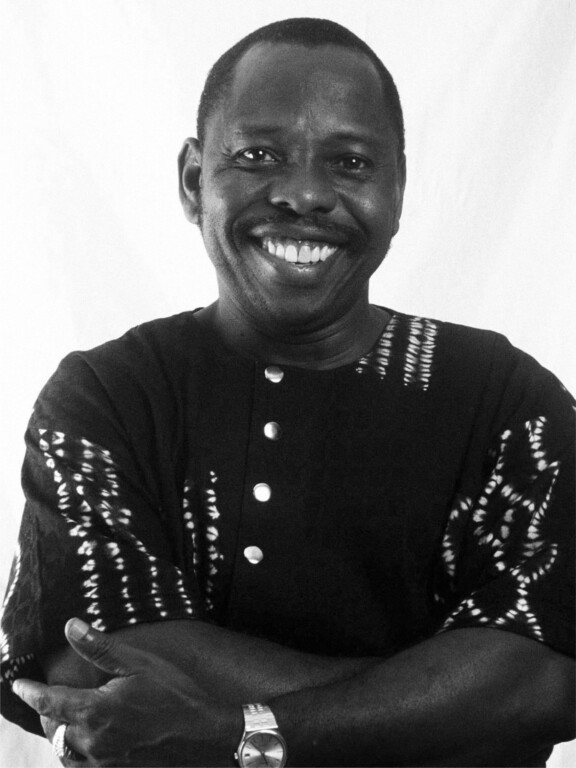
In the Niger Delta, oil brought wealth to Nigeria but left many communities asking what they gained from it. Among the strongest voices in that struggle was Kenule Beeson Saro Wiwa, a writer, businessman and activist who turned the pain of his Ogoni people into a national and international campaign.
Saro Wiwa did not begin his life as an environmental activist. He first built a career through education, writing, business and public service. Yet his roots in Ogoniland kept him close to the problems facing his people. He saw how oil production affected farmland, rivers and livelihoods. He also watched his community struggle to gain a stronger voice in decisions about its land and resources.
Born on 10 October 1941 in Bori, Rivers State, Saro Wiwa grew up in an Ogoni family with strong traditional ties. He attended Government College, Umuahia, before studying English at the University of Ibadan. His education opened the door to several careers. He taught, worked in government and later built a successful career as a writer and television producer.
His writing quickly showed his interest in ordinary people and the problems around them. In his 1985 novel, Sozaboy: A Novel in Rotten English, he explored the Nigerian Civil War through the eyes of a young village man. The novel showed the confusion and destruction that war can bring to people who have little control over political events.
Saro Wiwa also reached millions of Nigerians through television. He created Basi & Company, a popular sitcom that used humour to examine Nigerian society. The programme tackled issues such as greed, corruption, ambition and the search for quick wealth. Through fiction and satire, Saro-Wiwa found another way to question the society around him.
A different fight in Ogoniland
By the late 1980s, environmental concerns had become central to Saro Wiwa’s activism. Oil companies had operated in Ogoniland for decades. Saro Wiwa argued that oil production had damaged the environment while local communities carried much of the cost.
He helped establish the Movement for the Survival of the Ogoni People, known as MOSOP, in 1990. The movement demanded political, economic and environmental rights for the Ogoni people.
Saro Wiwa used peaceful protests, writing and international advocacy to draw attention to Ogoniland. He challenged both the Nigerian government and the oil industry. His campaign gained support beyond Nigeria because it connected environmental protection with human rights and the rights of indigenous communities.
His activism also created powerful opponents. The military government under General Sani Abacha viewed MOSOP with suspicion. Tensions increased as Saro Wiwa continued to speak publicly about Ogoni grievances.
The Ogoni Nine
In 1994, authorities arrested Saro Wiwa after the killing of four Ogoni leaders during a period of intense tension within the community. Prosecutors accused him and eight other Ogoni activists of involvement in the killings.
Saro-Wiwa rejected the accusations.
The trial attracted international attention. Human rights groups and international observers questioned the fairness of the proceedings. Despite the criticism, the military tribunal convicted Saro Wiwa and the other eight activists.
The group became known as the Ogoni Nine.
On 10 November 1995, authorities executed Saro Wiwa and the other eight men by hanging in Port Harcourt. He was 54.
His execution shocked Nigeria and drew condemnation around the world. It also pushed the environmental problems in Ogoniland further into the global spotlight. The Commonwealth suspended Nigeria after the executions.
A voice that outlived him
Saro Wiwa’s death did not end the issues he raised. Instead, his story became part of a much larger conversation about oil, environmental protection, corporate responsibility and the rights of local communities.
His work also earned international recognition. In 1995, he received the Goldman Environmental Prize for his environmental activism and leadership of the Ogoni campaign.
Today, his name remains closely linked with the struggle for environmental justice in the Niger Delta. His books continue to introduce new readers to his ideas and experiences. His story also remains relevant whenever Nigerians debate oil production, pollution and the treatment of communities in resource rich areas.
Ken Saro Wiwa lived several lives in one. He worked as a teacher, government official, businessman, writer and television producer. But history remembers him most strongly for what he did when he chose to speak for Ogoniland.
He knew the risks that came with confronting powerful institutions. He continued anyway.
His life ended at the hands of the state, but his questions did not end with him. Who benefits from Nigeria’s natural resources? Who pays the environmental cost? And what rights should communities have over the resources beneath their land?
Those questions helped define Saro Wiwa’s activism. They also explain why, decades after his execution, his name still carries weight whenever Nigeria’s oil producing communities demand justice.