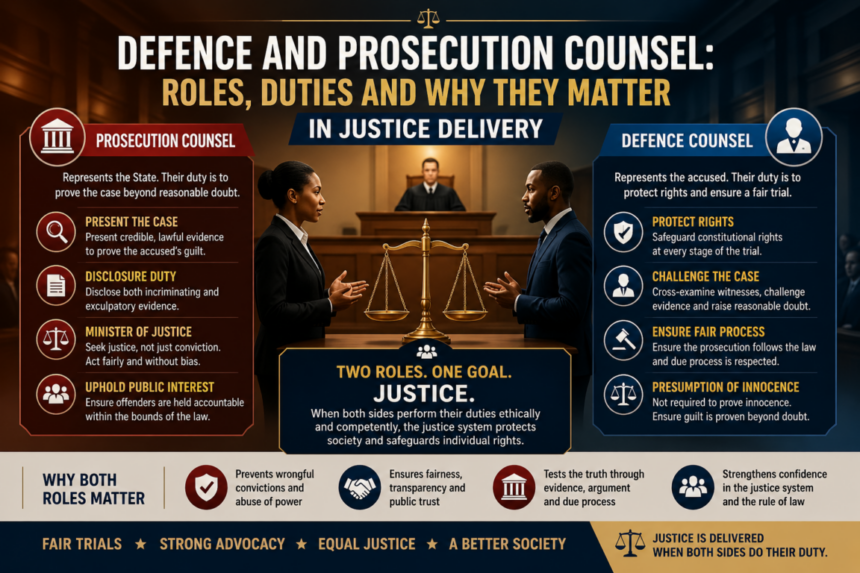
In every criminal trial, two sides shape the outcome, the defense counsel and the prosecution.
While they oppose each other in court, both play essential roles in ensuring justice is fair, balanced, and credible.
The Role of Defense Counsel
A defence lawyer represents the accused and is responsible for protecting their legal rights throughout the trial.
This includes advising the client, reviewing evidence, and building a strong legal strategy. In court, the defence counsel challenges the prosecution’s case by cross-examining witnesses and questioning the validity of evidence.
They may also negotiate plea agreements or argue for reduced sentences where necessary. However, their role has clear limits, they cannot mislead the court, present false evidence, or assist in criminal activity.
Ultimately, the defence ensures that the accused gets a fair trial and that the burden of proof remains on the prosecution.
The Role of Prosecution Counsel
The prosecution counsel represents the state and is tasked with proving that a crime has been committed.
They work closely with law enforcement agencies to gather evidence, prepare witnesses, and present the case in court. Their duty goes beyond securing convictions, they are expected to seek justice.
This includes presenting credible evidence, disclosing relevant information to the defence, and ensuring due process is followed at every stage.
Key Differences
While the defence counsel focuses on protecting the accused, the prosecution seeks to establish guilt based on evidence.
The defence tests the strength of the case, while the prosecution builds and presents it. Together, they create a system of checks and balances that helps courts arrive at fair decisions.
Pros of the System
One major advantage of this legal structure is fairness. It ensures that no individual is judged without proper representation.
It also reduces the risk of wrongful convictions and holds the state accountable to prove its case beyond reasonable doubt.
Additionally, the system promotes transparency, as both sides must present their arguments openly in court.
Cons and Criticisms
Despite its strengths, the system is not without challenges.
Critics argue that highly skilled defence lawyers can sometimes exploit technicalities, which may delay justice or weaken accountability.
There are also concerns about unequal access to quality legal representation, especially for individuals who cannot afford experienced counsel.
The roles of defence and prosecution counsel are fundamental to the justice system. While they stand on opposing sides, their combined efforts ensure that trials are fair, thorough, and guided by the rule of law.
In the end, justice is best served when both sides perform their duties within the boundaries of the law and professional ethics.