The National Commission for Almajiri and Out-of-School Children Education has come under intense scrutiny after details of the 2026 Appropriations Act revealed that it allocated N8.4 billion for road construction projects, despite its statutory mandate being focused on tackling Nigeria’s out-of-school children crisis.
The development has sparked criticism from civil society organisations, budget experts and transparency advocates, who argue that the projects fall outside the commission’s legal responsibilities and could undermine accountability in public spending.
Budget documents show that the commission received a total allocation of N22.82 billion for the 2026 fiscal year, comprising N21.68 billion for capital expenditure and N1.14 billion for recurrent expenditure.
A review of the budget reveals several projects unrelated to education, including road construction, solar-powered street lights, ambulances, dental equipment and empowerment programmes.
The commission, established by an Act of Parliament on May 27, 2023, under the Federal Ministry of Education, was created to address the growing number of out-of-school children by integrating formal education, Qur’anic learning and vocational skills training.
According to the National Policy on the Enhancement of Almajiri Education in Nigeria, the agency is expected to coordinate educational interventions, support learning centres, provide scholarships, promote school feeding programmes, train teachers and protect children from abuse and exploitation.
However, road construction and medical infrastructure projects are not listed among its statutory functions.
The budget allocates billions of naira to road projects across Ogun, Katsina and Ekiti states.
Among the projects are:
- N1.4 billion for the rehabilitation and construction of Eyinni High School–Lusada Junction Road, Ibooro; Idiya Central Community Road, Abeokuta; Ile Ise Community Asuje Road and Soyoye Community Road in Ogun State.
- N1.05 billion for Pakoiji-Iporan Township Road in Ipokia Ward 2, Ogun State.
- N1.05 billion for RCC opposite Honda Agbebi Community Road and Ajuwon Baale Road in Ogun State.
- N1.4 billion for Obasanjo Itele Road, Nazareth Road, Oke Ola, Imeko, Idogo Township Road and Odedeyo-Mewuro Road in Ogun State.
- N1.05 billion for internal roads in Dan Marke, Katsina State.
- N1.05 billion for internal roads in Sabon Gari Yargoje and Sharada Burburga in Katsina State.
- N1.4 billion for internal roads within Government Science College, Iyin, Ekiti State.
The commission also earmarked:
- N700 million for ambulances, furniture, dental X-ray machines and dental chairs for a dental centre in Iyin, Ekiti State.
- N700 million for solar-powered streetlights in Danmarke, Jamruwa, Gidan Chindo and Sabon Gida communities in Kankara Local Government Area of Katsina State.
- N700 million for women and youth empowerment tools in Kankara LGA.
Observers note that such projects ordinarily fall under agencies responsible for works, health, rural electrification and community development.
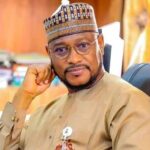
When contacted, the commission’s Executive Secretary, Dr. Muhammad Sani Idris, said he needed additional time to obtain details from the agency’s budget office before commenting on the allocations.
Meanwhile, a source within the Budget Office of the Federation said many off-mandate projects are often introduced during the National Assembly budget process.
According to the source, lawmakers frequently channel constituency projects through federal agencies, regardless of whether the projects align with the agencies’ mandates.
The source explained that agencies sometimes accept such projects due to fears that rejecting them could affect budget approvals.
A source familiar with the Senate Appropriations Committee also confirmed that the practice is common.
The source said lawmakers often partner with federal agencies to execute constituency projects, which are then inserted into agency budgets and implemented after approval.
Executive Director of the Civil Society Legislative Advocacy Centre (CISLAC), Auwal Musa Rafsanjani, described the allocations as a dangerous distortion of institutional mandates.
According to him, assigning road projects to an education-focused commission undermines institutional effectiveness and diverts resources from addressing Nigeria’s severe education challenges.
“The National Commission for Almajiri and Out-of-School Children Education was created to address educational exclusion, not to construct roads,” Rafsanjani said.
He warned that the practice weakens transparency and accountability because it becomes difficult to determine which institution should be held responsible for project outcomes.
Rafsanjani further argued that such allocations create opportunities for weak oversight, poor project monitoring and possible misuse of public funds.
He called on the Federal Government, National Assembly, Auditor-General’s Office and anti-corruption agencies to review the allocations and ensure compliance with public finance laws.
Dr. Umar Yakubu of the Centre for Fiscal Transparency and Public Integrity said the commission should focus on addressing Nigeria’s estimated 20 million out-of-school children, one of the highest figures in the world.
He argued that resources should instead be directed towards classrooms, learning materials, educational technology, teacher support and school feeding programmes.
Yakubu alleged that large infrastructure projects are often attractive because of the huge financial outlays involved.
“When commissions begin constructing roads, it raises questions because those projects involve billions of naira and often present opportunities for kickbacks,” he said.
He also criticised the National Assembly for approving projects that do not align with the commission’s legal responsibilities.
According to him, monitoring educational outcomes is already challenging enough without adding road construction projects to the commission’s workload.
Chairman of the Gombe Network of Civil Society Organisations, Ibrahim Yusuf, also questioned the rationale behind assigning road construction responsibilities to an education agency.
“How can the Almajiri Commission be constructing roads? What is the justification?” he asked.
Yusuf described the allocations as evidence of weak oversight and misplaced priorities within Nigeria’s public finance system.
He called on the executive, legislature and judiciary to scrutinise the budget and investigate what he described as growing distortions in public expenditure.
The controversy has renewed debate over constituency project insertions and the practice of assigning projects to agencies with no statutory responsibility for their execution.
Analysts warn that unless stricter budget discipline is enforced, institutions created to address critical national challenges may struggle to fulfil their core mandates.
For the Almajiri Commission, critics argue that the priority should remain reducing illiteracy, expanding access to education and addressing the millions of Nigerian children currently outside the formal school system, rather than executing projects traditionally reserved for works, health and infrastructure agencies.