
As Nigeria continues to grapple with the rising cost of living, the question of what citizens should demand from political candidates is becoming increasingly important.
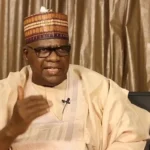
For Hassan Gimba, the candidate who will earn his vote must have a clear plan for addressing the cost of petroleum products, the role of subsidies, the declining purchasing power of the naira and Nigeria’s dependence on imported goods.
Gimba argues that the cost of petroleum products has a direct impact on virtually every aspect of Nigerians’ daily lives. Higher fuel prices increase transportation and logistics costs, while also raising the cost of private electricity generation for households and businesses.
According to him, the impact extends to agriculture, where farmers who depend on tractors and other machinery face higher operating costs. Those costs are eventually passed on to consumers through higher food prices.
The same challenge, he argues, affects small businesses such as tailoring shops, salons, fabrication workshops, mills, welding businesses and vulcanising shops, many of which depend on petrol or diesel-powered generators because of unreliable electricity supply.
For larger industries and manufacturing companies, rising operating costs can translate into higher prices and, in some cases, workforce reductions.
Gimba maintains that the resulting pressure on household incomes can affect savings, education, nutrition and access to healthcare, while prolonged economic hardship can also contribute to social tension.
However, he says he would not support a presidential candidate merely because the candidate promises to restore fuel subsidies.
He argues that previous subsidy regimes did not eliminate the economic difficulties Nigerians experienced and points to countries without petroleum subsidies whose citizens nevertheless enjoy relatively high living standards.
Instead, Gimba says his preferred candidate would need to demonstrate how Nigeria can protect citizens from the effects of high energy and living costs regardless of whether subsidies are maintained.
The Naira and Nigeria’s Productivity
At the centre of Gimba’s argument is the strength of the Nigerian currency.
He believes strengthening the naira requires Nigeria to become more productive and reduce its dependence on imported goods.
His preferred candidate, he says, should pursue policies that encourage Nigerians to produce more of what the country consumes — from food and clothing to vehicles and other manufactured goods.
Gimba argues that simply increasing wages without addressing the underlying weakness of the currency may not provide lasting relief.
He points to Nigeria’s minimum-wage debate and compares the purchasing power of wages in earlier decades with their value today.
He recalls that the Udoji Commission’s recommendations in the 1970s led to an increase in the annual minimum wage from ₦312 to ₦720, when the naira had significantly greater value relative to the US dollar.
For Gimba, the comparison illustrates his broader argument that nominal salary increases cannot by themselves solve the problem of declining purchasing power.
He therefore argues that strengthening the productive capacity of the economy and the value of the currency should accompany any increase in workers’ wages.
Cutting Political Spending
Another proposal put forward by Gimba is a reduction in the salaries and allowances of public officials, particularly elected politicians, political appointees and senior officials of government agencies.
He argues that reducing what he describes as excessive public-sector political spending could create additional resources that could be redirected toward workers and essential services.
For him, the issue is not simply how much government pays workers but how effectively public resources are distributed across society.
From Consumers to Producers
Gimba’s broader vision centres on transforming Nigeria from a predominantly consuming economy into a productive and export-oriented one.
He says the candidate who earns his vote must demonstrate a credible plan for moving Nigeria beyond exporting raw materials and importing finished products.
He also argues that Nigerians should develop greater confidence in locally produced goods and the naira.
Using examples from countries such as Saudi Arabia, he argues that national currencies gain strength when citizens and businesses have confidence in and actively use their domestic currency.
Made-in-Nigeria Economy
Gimba further challenges political leaders to demonstrate their commitment to local production through their own choices.
He asks why Nigerian political leaders should not wear locally produced textiles, use locally manufactured products and encourage government institutions to patronise Nigerian-made vehicles.
He also questions why international automobile companies should simply export vehicles to Nigeria rather than establish assembly and manufacturing plants in the country.
According to his argument, encouraging such companies to establish production facilities in Nigeria could create jobs, develop local skills, increase domestic production and reduce pressure on the country’s foreign-exchange reserves.
The Candidate He Will Vote For
Ultimately, Gimba says his preferred candidate is not simply someone who promises cheaper fuel, higher salaries or the return of subsidies.
Rather, he says he will vote for a candidate who can convince him that they have a credible plan to transform Nigeria into a productive economy capable of manufacturing finished goods, exporting products and strengthening the naira.
His argument is that sustainable improvement in Nigerians’ living standards will require more than increases in nominal income. It will require an economy capable of producing more, creating jobs, supporting local industries and retaining more wealth within the country.
For Gimba, the central question is therefore not simply who will promise Nigerians more money, but who can build an economy in which the money Nigerians already earn has greater purchasing power.
Hassan Gimba, ANIPR, is the Publisher and CEO of Neptune Prime.