Rescuers and volunteers in Colombia searched through collapsed buildings early Tuesday after a 7.4-magnitude earthquake killed at least 132 people and injured more than 570 others.
The powerful earthquake struck western Colombia shortly after 7:30am local time, sending residents rushing into the streets as buildings shook and structures collapsed.
The disaster affected several cities, including Pereira, Manizales, Quibdo and Cali, while strong tremors also reached the capital, Bogota.
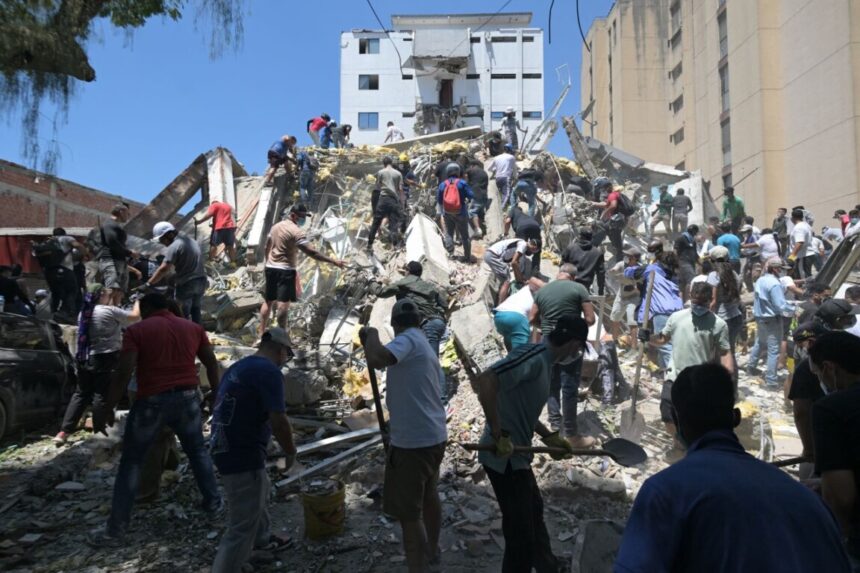
In several affected communities, volunteers joined professional rescue teams to search for people trapped beneath collapsed buildings.
Rescuers used their hands, buckets and basic tools to remove bricks and other debris. They also formed human chains to move rubble away from damaged structures.
In Cali, volunteers worked alongside firefighters and other emergency personnel as they searched for survivors.
Rescue worker Nelson Moreno described the scenes as chaotic, with people rushing through the streets to find family members and friends.
Emergency teams continued their work into the night, with volunteers calling for flashlights and protective equipment to support the search.
Pereira was one of the cities that suffered major damage from the earthquake.
Large parts of the city lost electricity, leaving residents in darkness as rescue teams searched damaged buildings.
Residents described scenes of widespread destruction, with walls and floors collapsing and cables scattered across roads.
Andres Hernandez, a tattoo artist in the city, said he rushed outside when the earthquake struck. He expressed concern about family members and friends as damaged structures remained at risk of further collapse.
The earthquake caused significant damage in several cities.
In Manizales, the quake damaged a tower of the city’s neo-Gothic cathedral, one of its well-known landmarks.
In Quibdo, officials reported major disruptions to public services and communications.
Residents described scenes of panic as people fled their homes during the shaking. Some reportedly jumped from buildings to escape the destruction.
The earthquake also caused damage to homes and other structures, leaving many residents afraid to return indoors.
Earthquake Felt as Far as Ecuador and Panama
The earthquake struck at a depth of about 110 kilometres, according to the report.
The tremor was felt across Colombia, including Bogota, where residents rushed into the streets.
People in neighbouring Ecuador and Panama also felt the earthquake.
Experts from the United States Geological Survey said the earthquake was likely linked to movement along a deep fault within the Nazca tectonic plate.
Emergency Response Intensifies
Colombian authorities placed hospitals in five cities on red alert following the disaster.
Officials also imposed a nighttime curfew in Cali as emergency teams continued rescue and recovery operations.
At least six local airports suspended operations, according to the country’s civil aeronautics agency.
President Abelardo de la Espriella, who had taken office only three days earlier, declared a state of emergency and promised a coordinated response to the disaster.
The president initially reported a lower death toll before authorities later confirmed that at least 132 people had died.
International Support for Colombia
The scale of the disaster prompted offers of assistance from several countries and international organisations.
The United States said it was monitoring the situation and later announced $15.5 million in emergency relief for Colombia.
European Commission President Ursula von der Leyen said the European Union had activated the Copernicus satellite service to support rescue operations.
Israel, Mexico, Ecuador and France also offered assistance.
Colombian singer Shakira joined calls for solidarity, urging people across the country to support one another.
Search for Survivors Continues
Despite the scale of the destruction, rescue workers and volunteers continued searching for survivors.
Teams stopped at intervals to listen for voices beneath the rubble before removing more debris.
For families still waiting for news of loved ones, every hour remains critical.
The Colombia earthquake has left communities facing deaths, injuries, damaged homes and disrupted services. However, the continued mobilisation of rescue workers, volunteers and international partners offers hope for those still trapped.
As search operations continue, authorities face the difficult task of rescuing survivors, treating the injured and assessing the full extent of the destruction.
For Colombia, the immediate priority is clear: find those still alive, support the injured and help communities recover from one of the country’s strongest earthquakes in a decade.