
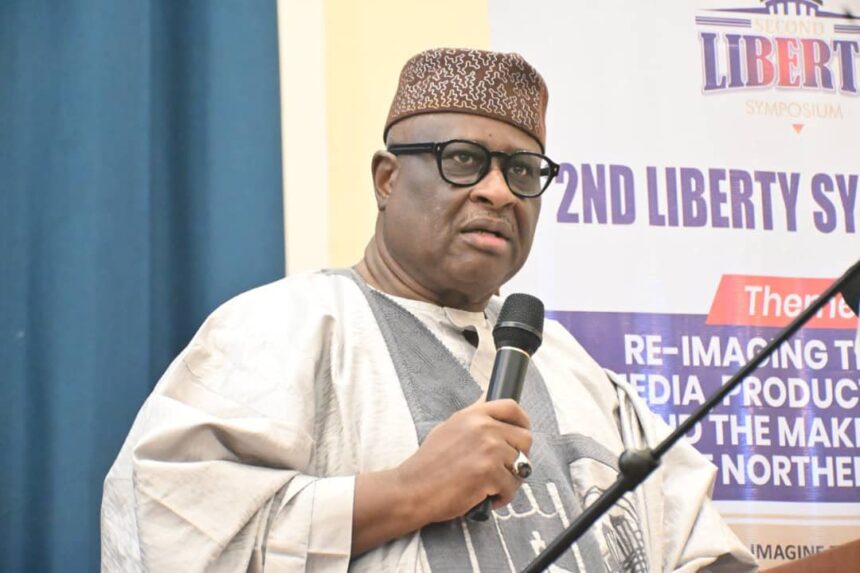
The Convener of the Liberty Symposium, Dr. Ahmed Tijjani Ramalan, has welcomed President Bola Ahmed Tinubu’s directive to the Federal Competition and Consumer Protection Commission (FCCPC) to investigate major foreign technology companies, global media platforms, digital content aggregators and generative artificial intelligence providers.
The probe centres on allegations of anti-competitive practices and the unregulated exploitation of Nigerian media content.
Dr. Ramalan described the presidential directive as a landmark intervention, saying it demonstrates the Federal Government’s commitment to protecting Nigeria’s media ecosystem.
The move also promotes fair competition, safeguards national digital sovereignty and supports the long-term sustainability of indigenous media organisations.
In a statement issued on Wednesday in Abuja, the Liberty Symposium Convener said the President’s decision validates key resolutions adopted at the 2nd Liberty Symposium.
During the event, stakeholders from across the media industry warned about the growing threat posed by dominant foreign digital platforms to Nigeria’s broadcasting and journalism sectors.
The symposium, he explained, identified the unchecked commercial exploitation of Nigerian news and broadcast content by powerful global technology companies, digital platforms and AI systems. He described the trend as an existential challenge that requires urgent regulatory attention.
“We commend President Bola Ahmed Tinubu for taking this bold and timely step. The directive to the FCCPC represents a major milestone. It addresses anti-competitive conduct, lack of transparency and unfair commercial practices. These platforms continue to profit from Nigerian media content without returning fair value to local content creators and media organizations.”
Ramalan stated that Nigerian television stations, publishers and other media organizations invest enormous resources in producing credible public-interest journalism.
However, foreign digital platforms monetise and distribute the same content on a massive scale. They do so without adequate regulatory oversight, equitable commercial arrangements or sufficient protection for local media businesses.
He noted that the Liberty Symposium Communiqué warned about the growing dominance of global digital platforms.
The communiqué also stated that the trend has weakened the commercial viability of indigenous media organizations. It has diverted advertising revenue, audience engagement and digital value away from Nigerian content producers.
“The sustainability of Nigeria’s media industry is directly linked to the country’s democracy, national security and informed public discourse. Protecting local journalism is therefore a matter of national interest,” he added.
Several countries have already introduced regulatory and competition measures to address similar concerns involving major global technology companies, Ramalan observed. He stressed that Nigeria must not fall behind in ensuring fairness within its digital economy.
He called on the FCCPC, under the leadership of Executive Vice Chairman and Chief Executive Officer Tunji Bello, to conduct an independent, transparent and evidence-based investigation.
The exercise, he said, should also meet internationally recognised standards. It should follow the presidential directive communicated through the Minister of Information and National Orientation, Mohammed Idris.
The Liberty Symposium pledged its full cooperation with the Commission, promised to provide documentary evidence, research findings, expert submissions and industry perspectives to support the investigation.
“Our objective is not to discourage innovation or investment,” Ramalan said. “Rather, it is to promote a fair, transparent and balanced digital media economy. Such a system will protect Nigerian sovereignty, strengthen indigenous media institutions, encourage responsible technological innovation and guarantee equitable opportunities for every participant within Nigeria’s information ecosystem.”
Expressing confidence in the process, Ramalan said a thorough investigation would help establish an appropriate regulatory framework. Such a framework would ensure accountability among global digital corporations. It would also protect Nigerian consumers, content creators, broadcasters and media investors.
Finally, he urged media organizations, regulators, civil society groups, technology companies and policy experts to support the process. He said their collective effort would help preserve Nigeria’s media independence and strengthen the country’s digital future.