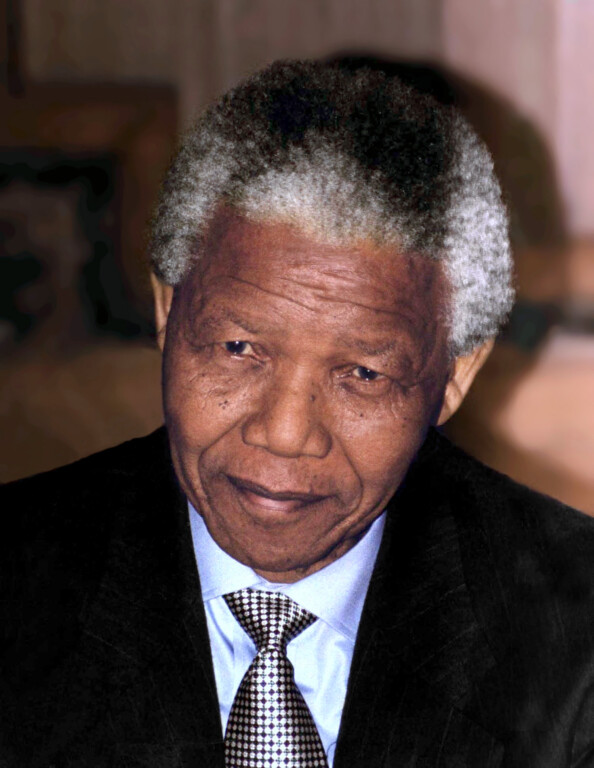
Nelson Mandela was born in 1918 in Mvezo, a rural village in South Africa’s Eastern Cape, he grew up in the Thembu royal household tradition, but his early life was far from privileged.
Mandela herded cattle, learned local customs, and absorbed both Xhosa culture and Christian teachings through mission schooling.
A teacher at his school gave him the English name “Nelson,” replacing his birth name Rolihlahla, which meant “troublemaker.”
That label later seemed fitting as he developed a reputation for questioning authority, his early education continued at institutions such as the University of Fort Hare, followed by legal training in Johannesburg, where he encountered organized political resistance to racial inequality for the first time.
South Africa hardened into a formal system of racial segregation in 1948 under Apartheid. This system separated people by race and restricted land ownership, education, movement, and political rights for the Black majority.
Mandela and other activists in the African National Congress responded by organizing resistance campaigns aimed at challenging these laws.
He joined the ANC in 1944 and helped establish its Youth League. The group pushed the organization toward stronger mass action, including boycotts and strikes.
Mandela initially believed in non-violent protest, but growing state repression pushed him and others to reconsider their approach.
After the Sharpeville Massacre in 1960, where police killed peaceful demonstrators, the state banned liberation movements and increased arrests. Mandela helped form Umkhonto we Sizwe, the ANC’s armed wing, which carried out sabotage against government infrastructure. He argued that the government had closed all peaceful paths to change and forced resistance into new forms.
Authorities arrested him in 1962. He was later tried in the Rivonia Trial and sentenced in 1964 to life imprisonment for conspiring to overthrow the state. He began what would become 27 years in prison, much of it spent on Robben Island under harsh and isolating conditions.
Prison authorities attempted to silence him by restricting communication and limiting his influence. Instead, his reputation grew internationally. Activists, governments, and global organizations increased pressure on South Africa through sanctions and protests, and Mandela became a symbol of resistance to racial oppression even while incarcerated.
By the late 1980s, South Africa faced mounting internal unrest and growing international isolation. The government began secret negotiations with Mandela while he was still in prison. In 1990, President F. W. de Klerk released him, and both men entered formal talks aimed at dismantling apartheid and building a democratic system.
The transition period remained unstable, marked by political violence and deep mistrust between factions. Despite this, negotiations continued and eventually led to South Africa’s first fully democratic elections in 1994. Mandela won the presidency and became the country’s first Black head of state.
His government chose reconciliation over retaliation. It established the Truth and Reconciliation Commission to investigate past human rights abuses and encourage national healing. His administration also worked on expanding access to housing, healthcare, and education while trying to stabilize a deeply divided society.
Mandela served a single presidential term and stepped down in 1999, setting an example for peaceful political transition. In his later years, he focused on humanitarian efforts, especially poverty reduction and HIV/AIDS awareness, through the Nelson Mandela Foundation.
He received the Nobel Peace Prize in 1993 alongside F. W. de Klerk for their role in ending apartheid through negotiation rather than civil war. While some critics debated his compromises and earlier support for armed resistance, his global reputation remained that of a leader who helped dismantle institutionalized racial segregation and guide South Africa toward democracy.