Many of the historical connections between Africa and Latin America, shaped centuries ago through the trans-Atlantic slave trade, remain largely unexplored.
However, a cultural initiative in southeastern Nigeria is now working to rebuild those links through music, language, dance, and community engagement.
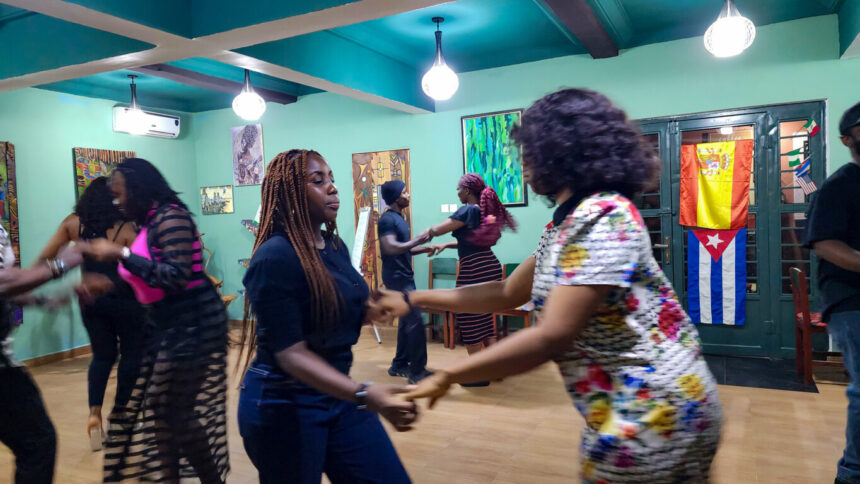
In Enugu, southeastern Nigeria, a beginner’s salsa class has become more than just a dance session. It serves as a meeting point where culture, identity, and language come together.
As music fills the room, students move across the wooden floor while an instructor counts steps in Spanish. Conversations flow between English and Spanish as participants experience Hispanic culture for the first time.
Using Culture To Teach Language
According to Uchenna Vasser, the goal goes beyond teaching vocabulary and grammar.
“If we just said ‘come and learn Spanish,’ people may not come,” Vasser explained. “But when they come for the experience, they begin to ask questions.”
That philosophy inspired the creation of SLANG Global, a cultural and language initiative founded by Vasser in 2022. Instead of relying only on textbooks and classroom lessons, the center introduces people to the Spanish-speaking world through salsa classes, karaoke nights, music, art, and shared meals.
As participants engage with the culture, many gradually develop interest in learning the Spanish language and understanding the deeper historical ties between Africa and Latin America.
A Personal Encounter Sparked The Vision
Vasser said the idea behind the project emerged from a personal experience during a visit to North Carolina in the United States.
She recalled meeting a man who warmly greeted her with the Spanish word “hermana,” meaning sister. The encounter left a lasting impression because, according to her, it reflected a deeper connection rooted in shared African ancestry.
“He saw me and recognized himself,” she said. “And I realized that people like him don’t fully remember where they are from, but they know they are from Africa.”
That moment pushed her to reflect on the millions of Africans taken across the Atlantic during the trans-Atlantic slave trade. Many were transported from West Africa, including territories that are now part of modern-day Nigeria.
Over generations, their descendants blended African traditions with cultures across Latin America, creating lasting influences in music, food, religion, language, and social life.
Rebuilding Lost Historical Connections
Vasser believes those historical links should not remain distant memories.
“If there was no trans-Atlantic slave trade, there would be no Spanish-speaking African diaspora,” she said.
Today, SLANG Global aims to reconnect those cultural ties while also helping Nigerians access opportunities linked to Spanish language skills.
The initiative has already trained more than 60 women who can now communicate fluently in Spanish. According to Vasser, the project works as a cultural bridge that moves in both directions by teaching Nigerians about Hispanic cultures while also sharing African traditions with others.
Students Discover Shared Cultures
Inside one of the classrooms, students carefully repeat Spanish phrases while learning pronunciation and conversational skills.
One participant, Mabel Mmesoma, described the experience as transformative.
“I didn’t really know much about them,” she said, referring to people in Latin America. “But now I see the similarities in our food, our dance, even how we live.”
She added that learning Spanish has increased her confidence and made international travel feel more realistic. Countries such as Mexico, Colombia, and Venezuela, once distant places to her, have now become destinations she hopes to visit in the future.
Opportunities Beyond Culture
The initiative also explores broader conversations about identity, history, tourism, and economic cooperation.
According to Ben Etiaba, many Nigerians remain unaware of the strong historical ties linking Africa and Latin America because daily economic struggles often dominate public attention.
“We have bigger problems to worry about,” Etiaba said. “People are focused on survival, not on tracing connections across continents.”
Despite this, he believes recognizing those shared roots could open new opportunities in tourism, trade, and cultural exchange.
“There are our brothers and sisters out there,” he added. “If we recognize that, we can build relationships — cultural, economic, even tourism.”
Spanish Language Growing In Global Importance
Spanish remains one of the world’s most widely spoken languages, with hundreds of millions of speakers across more than 20 countries, including Equatorial Guinea in Africa.
Experts say language skills could create educational, economic, and diplomatic opportunities for young Nigerians in an increasingly connected global economy.
Etiaba believes early awareness of those possibilities will benefit future generations.
“The future belongs to those who see possibilities early,” he said. “Those who understand this connection now will benefit from it.”
A Growing Cultural Movement
For Vasser, the long-term goal extends beyond dance classes or language lessons. She hopes initiatives like SLANG Global can eventually become part of Nigeria’s broader educational system and youth development programs.
She also believes cultural exchange can help reposition Africa within global conversations by strengthening relationships built on shared history, identity, and collaboration.
Back in the salsa class, students continue adjusting their steps to the rhythm of the music. Some are still learning, others are becoming more confident, but the atmosphere remains welcoming and curious.
Step by step, the cultural bridge Vasser imagined is beginning to take shape.