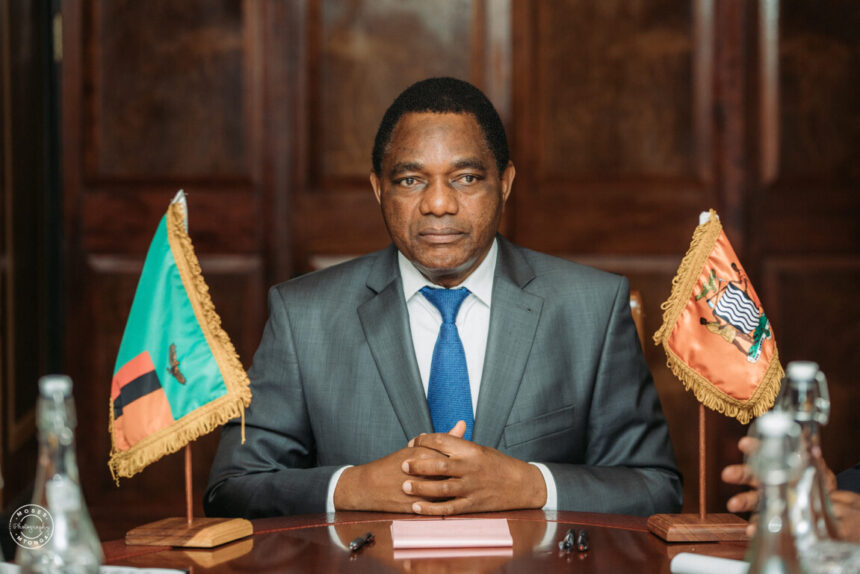
Zambia’s governing United Party for National Development (UPND) has formally endorsed incumbent President Hakainde Hichilema as its sole presidential candidate for the August 13 election, following a party convention where he emerged unopposed.
The endorsement consolidates Hichilema’s position within the ruling party, signaling strong internal cohesion ahead of a critical electoral contest. Party delegates at the convention offered unanimous backing, with no rival candidates stepping forward to challenge his nomination.
Hichilema, who assumed office in 2021 after defeating then-incumbent Edgar Lungu, is seeking a renewed mandate amid expectations of economic reforms, debt restructuring efforts, and governance consolidation. His administration has faced both domestic scrutiny and international engagement, particularly on fiscal policy and democratic governance.
Political analysts often interpret unopposed nominations within ruling parties in two contrasting ways. On one hand, it may reflect a high level of party unity and confidence in the incumbent’s leadership, especially where performance is seen as stable or reform-oriented. On the other hand, the absence of internal challengers can raise concerns about intra-party democracy, elite consensus-building, and the suppression—or absence—of dissenting voices within party structures.
In Zambia’s case, the UPND’s decision suggests a strategic alignment behind Hichilema as the party prepares for a competitive national election. However, broader electoral dynamics will depend on opposition mobilization, voter sentiment, and the administration’s track record since 2021.
As the August 13 vote approaches, attention is likely to shift toward campaign narratives, policy debates, and the overall credibility of the electoral process in one of Southern Africa’s key democracies.