
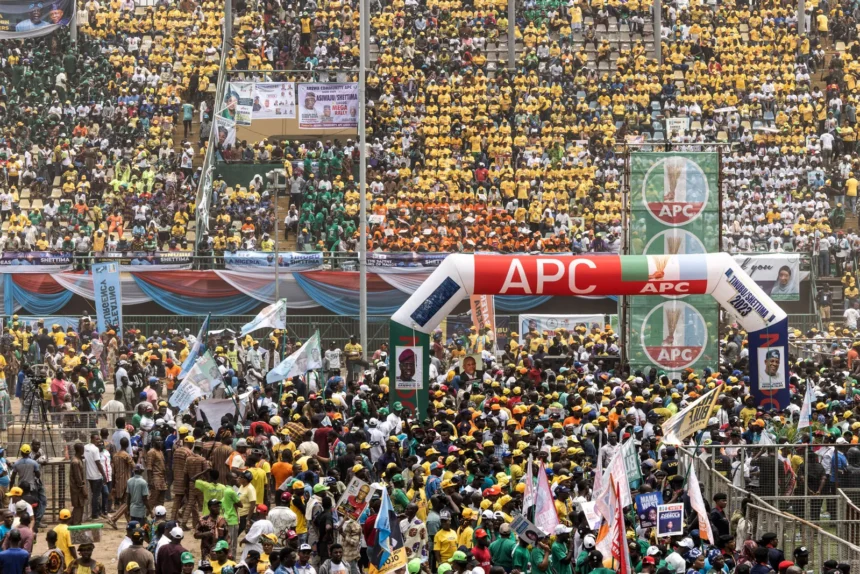
Nigeria’s political map is shifting in ways that catch the eye. Today, the All Progressives Congress (APC) holds the governorships of 31 out of 36 states. It’s a dominance that sparks conversations about balance, but it does not transform Nigeria into a one-party state. By law, the country remains a multiparty democracy, with a host of parties registered under the Independent National Electoral Commission (INEC) actively participating in elections.
The numbers tell a story: the Peoples Democratic Party (PDP) holds sway in just two states, while smaller parties such as Accord, APGA, and Labour govern one state each. APC’s reach, roughly eighty-six percent of the states, reflects a remarkable concentration of power at the state level.
The Pull of Defections
A key reason for this overwhelming control is the movement of governors between parties. Many who were originally elected under other banners, particularly the PDP and NNPP, have found their way into the APC. These shifts weaken opposition structures and amplify the ruling party’s influence across the federation.
Legally, governors enjoy flexibility. Unlike lawmakers, who face constitutional anti-defection rules, governors can change parties without losing their positions. This legal nuance gives political leaders room to realign their loyalties, often sparking a cascade effect as legislators and local officials follow the flow, drawn by access to federal resources or the desire to stay politically relevant.
Between Law and Reality
In theory, Nigeria is not a one-party state. Multiple parties continue to operate, contest elections, and win offices at various levels. In practice, however, some political analysts argue that APC’s dominance at the state level creates a de facto one-party environment. Critics warn that this can erode competition and dilute accountability, while supporters maintain that defections are simply the exercise of political freedom, and that elections remain competitive in many regions. Opposition voices, meanwhile, highlight the powerful influence of federal patronage and the fragility of internal party democracy as obstacles to genuine competition.
Why Governors Switch
The motivations behind these political migrations are familiar. Alignment with the federal government can unlock development funds or project support, while internal crises and factional battles within opposition parties push leaders to look elsewhere. For many, party ideology is a backdrop to personal ambition, and political survival often depends on making the “right” move at the right moment. While party-switching is not unique to Nigeria, the scale and frequency here make it particularly striking.
The Stakes for Democracy
Strong democracies thrive on vibrant opposition, competitive elections, and robust checks and balances. When one party dominates at both the state and federal levels, alternative political voices can be muted, accountability may weaken, and public confidence in political choice risks erosion. Yet Nigeria still hosts multiparty contests, and opposition parties continue to win seats, even if the terrain feels tilted.
Legally, Nigeria remains a multiparty democracy. Practically, the APC’s dominance has reshaped the political landscape, creating an environment where opposition parties face daunting challenges. Widespread defections have strengthened the ruling party, but the country is far from a one-party state. The real question lies in how democratic competition will evolve and whether opposition voices can regain momentum in this shifting political theatre.