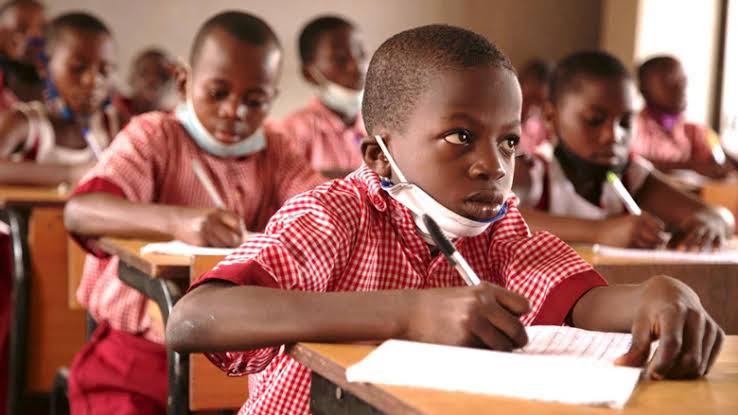
The Federal Government of Nigeria has revealed plans to scrap the common entrance exam for pupils moving into junior secondary school. Instead, it will introduce a continuous assessment system.
The Minister of Education, Tunji Alausa, says the new system will track pupils from primary one to primary six.
As a result, schools will no longer rely on a single exam. Instead, they will assess pupils based on their overall performance over time.
In addition, the government will introduce a Learner Identification Number (LIN).
This number will stay with each pupil throughout their education, remain valid even if they change schools and help authorities track academic progress.
Therefore, officials can better monitor pupils and reduce cases of dropouts.
Nigeria currently has over 50,000 public primary schools and more than 23 million pupils.
However, only about 3 million move on to junior secondary school in the public system.
This gap shows that many children stop schooling early. Moreover, not all of them switch to private schools.
According to the minister, limited school access remains a major problem.
So, the government is working with state authorities to:
- Build more schools
- Expand access to education
- Accommodate more students
School Feeding Programme Revival
Meanwhile, the government plans to revive the school feeding programme. This initiative aims to attract more children to public schools.
In addition, officials want to move the programme from the Ministry of Humanitarian Affairs to the Federal Ministry of Education.
This change should improve supervision and coordination.
Overall, the reform marks a shift toward a fairer and more inclusive system.
By using continuous assessment and student tracking, the government says it hopes to improve retention and ensure more children complete basic education.