Inflation and recession are common economic terms often discussed during periods of financial difficulty. However, they describe different economic conditions.
Inflation refers to a steady rise in prices of goods and services over time across an economy.
When inflation increases, the purchasing power of money falls and households can buy fewer goods with the same income.
Prices of food, transportation, housing and other essentials may rise during periods of high inflation.
Central banks such as the Central Bank of Nigeria use monetary policies to control inflation.
These policies often include adjusting interest rates to slow price increases and stabilize economic conditions.
Read Also: How Global Conflicts Affect African Economies
A recession, however, refers to a significant slowdown in economic activity across a country.
Economists usually describe a recession as two consecutive quarters of negative economic growth.
During recessions, businesses produce less, companies reduce hiring, and unemployment levels may increase.
Investment activity and consumer spending also tend to decline during periods of economic contraction.
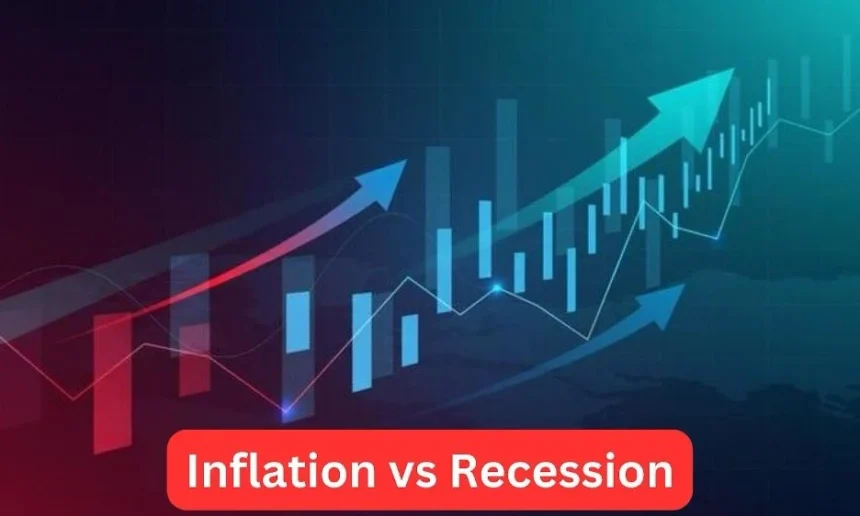
In simple terms, inflation focuses on rising prices while recession refers to a shrinking economy.
Sometimes both occur together in a rare situation called Stagflation.
Stagflation creates difficult conditions because prices rise while economic growth and employment weaken.
Understanding these differences helps explain why governments use different policies to address each economic challenge.