
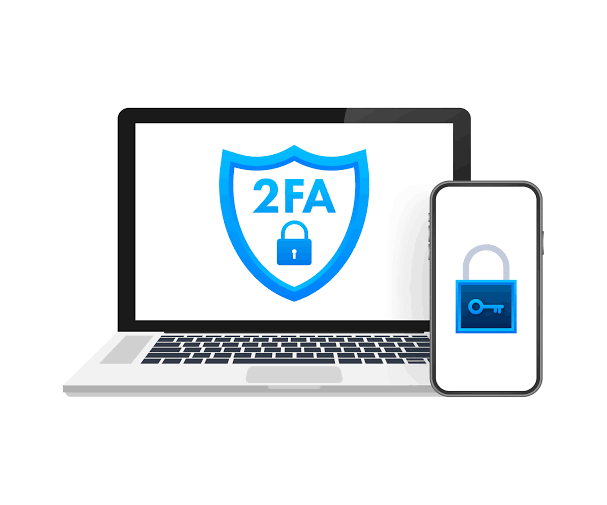
Most people protect their phones, emails and social media accounts with just one thing, a password.
However, passwords are no longer enough.
Hackers can guess them.
They can leak in data breaches.
And criminals can steal them through phishing or malware.
Because of these risks, cybersecurity experts now recommend Two-Factor Authentication (2FA) as an extra layer of protection.
Two-Factor Authentication adds a second step to confirm your identity when you log into an account.
Instead of relying only on a password, the system asks for another form of verification.
For example, you may receive:
- A code sent to your phone
- A fingerprint or Face ID scan
- A notification from an authentication app
This second step makes it much harder for attackers to access your account.
Read Also: ONSA and Its Role in Nigeria’s Security Architecture
Think of your password as the key to your house.
Two-factor authentication acts like a second lock on the door.
Even if someone steals your key, they still cannot enter without the second lock.
This matters because cybercrime is rising worldwide.
Every year, millions of people lose money and personal data due to hacked accounts. In many cases, the attack happens because one password was compromised.
Two-factor authentication strengthens your digital security in several ways.
First, it blocks unauthorized logins even when someone knows your password.
Second, it alerts you when someone attempts to access your account.
Third, it gives you time to stop the attack before serious damage occurs.
To stay safe online, enable two-factor authentication on your most important accounts.
Start with:
- Email accounts
- Social media platforms
- Banking and financial apps
- Cloud storage services
Also remember:
- Never share verification codes with anyone.
- Do not approve login requests you did not initiate.
Some people avoid 2FA because it adds a few extra seconds to the login process.
However, those seconds can prevent weeks of recovery, financial loss or identity theft.
In today’s digital world, one password is no longer enough.
Security is no longer optional.
It is essential.