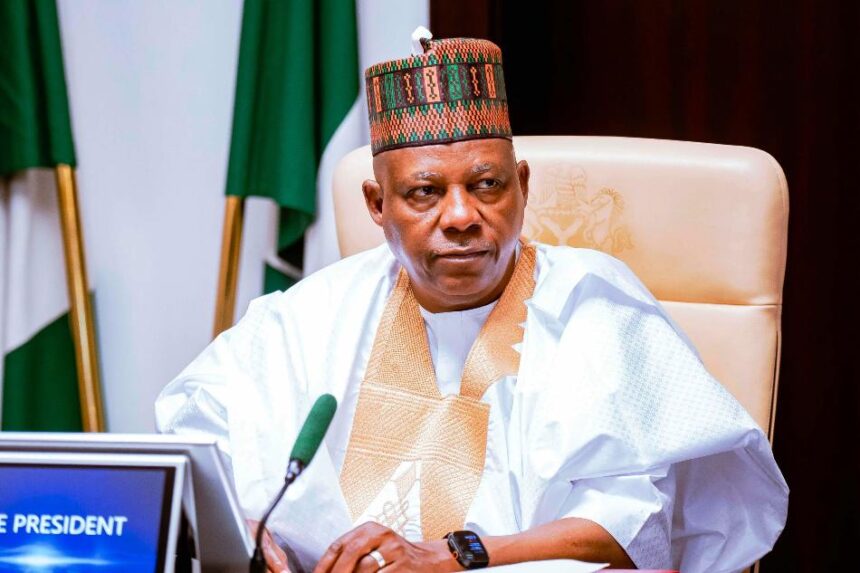
The Vice President, Kashim Shettima, has defended Nigeria’s ₦68 trillion 2026 budget, insisting that the country needs a bold and expansionary fiscal approach to drive sustainable growth.
He rejected calls for a slimmer budget, arguing that Nigeria must prioritise development outcomes rather than limit spending.
Shettima said Nigeria’s budget must reflect its development ambitions. He explained that reducing the size of the budget could slow economic growth and limit government impact.
According to him, the recent increase to ₦68 trillion aligns with the administration’s broader vision to improve infrastructure, create jobs, and raise living standards.
He stressed that budgeting should not only focus on numbers but also on delivering measurable improvements in people’s lives.
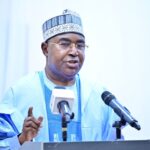
The Vice President spoke at a national policy dialogue held in Abuja. The event brought together policymakers and experts to examine how Nigeria can improve its budgeting system.
Represented by his Special Adviser, Tope Fasua, Shettima noted that the country stands at a critical point in its economic journey.
He emphasised that budgets must align closely with national development plans. More importantly, they should target key indicators such as poverty reduction, income growth, and improved social welfare.
Meanwhile, Shettima highlighted recent government reforms aimed at easing economic pressure on citizens.
He said authorities have reduced or removed tariffs on essential goods, including raw materials, pharmaceuticals, and industrial equipment.
As a result, manufacturers can lower production costs and increase output. In turn, this could stimulate economic activity and support job creation.
Furthermore, he noted that these policies reflect a deliberate effort to strengthen key sectors of the economy.
Also speaking at the event, former Budget Office Director-General Ben Akabueze warned that Nigeria’s budgeting system suffers from deep structural flaws.
He said the disconnect between planning and execution continues to undermine development efforts.
According to him, budgets often fail to translate long-term plans into real projects that benefit citizens.
Akabueze revealed that Nigeria currently has more than 56,000 abandoned projects across the country.
He described this as clear evidence of weak fiscal coordination and poor implementation.
He explained that many projects receive budget allocations but lack consistent funding, monitoring, or continuity.
As a result, public resources are wasted, and development goals remain unmet.
In addition, Akabueze called for comprehensive reforms to Nigeria’s fiscal framework.
He pointed out that the current system remains politicised and poorly structured. He also noted frequent delays, weak enforcement mechanisms, and limited accountability.
To address these issues, he urged the government to introduce stronger laws and clearer institutional roles.
Such reforms, he said, would ensure that budgets serve as a true guide for national development.
Overall, both speakers agreed that Nigeria must shift toward results-driven budgeting.
They stressed that public spending should focus on outcomes rather than mere allocations.
As pressure mounts for reform, policymakers face growing expectations to ensure that future budgets deliver tangible benefits for citizens.