
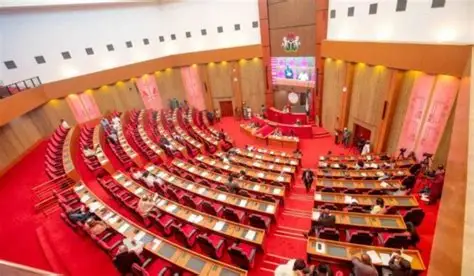
The Senate on Wednesday began voting on constitutional amendment bills that could reshape Nigeria’s security system. The proposal to create state police topped the agenda and drew intense national attention.
Several senior government officials attended the session including Chief of Staff to the President, Femi Gbajabiamila, APC governors, and state Attorneys-General.
The vote marks one of the most significant constitutional exercises since Nigeria returned to democratic rule in 1999.
Kaduna State Governor Uba Sani joined the governors of Ogun and Ondo states in the Senate Chamber. Attorneys-General from Anambra, Akwa Ibom, and other states also attended.
Their presence attracted attention because non-members rarely observe major legislative proceedings from inside the chamber.
Some senators reportedly questioned the decision to admit the visitors. Senate authorities later approved their attendance.
The Senate had planned to begin consideration of the amendment bills after the swearing-in of newly inaugurated senators.
However, lawmakers first held a closed-door session. The meeting lasted more than an hour after Senate Leader Opeyemi Bamidele moved a motion.
When senators returned, they prepared for debates and voting on the proposed constitutional changes.
Before the executive session, Senate President Godswill Akpabio urged lawmakers to focus on the national interest.
He described the constitutional review as a defining moment for the National Assembly and Nigeria’s democracy.
Akpabio said the proposed amendments could transform policing, public safety, and relations between federal and state governments.
“The decisions we take will shape the future of policing, public safety and intergovernmental relations in Nigeria for generations to come,” he said.
He called on senators to debate the issues with patriotism and open minds.
The Senate also introduced electronic voting for the exercise.
Akpabio said the system would record, display, and print every senator’s vote noting that the process would improve transparency and accountability.