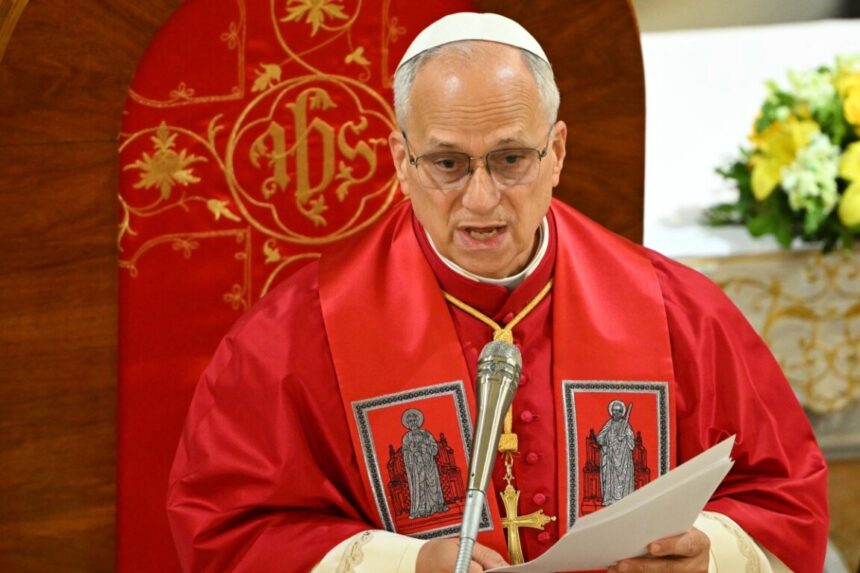
Pope Leo XIV is set to arrive in Cameroon on Wednesday as part of his African tour, drawing global attention amid political tensions, security concerns, and international criticism.
The visit marks a significant moment for the Catholic Church in Africa, particularly as it coincides with ongoing conflict in the country’s English-speaking regions.
The pope’s four-day visit to Cameroon follows the first leg of his African tour in Algeria.
During his stay, he is expected to engage with political leaders, religious communities, and thousands of Catholic faithful in what is seen as a mission of peace and unity.
A key highlight of the visit is a scheduled meeting with Paul Biya, one of the world’s longest-serving leaders.
Biya, 93, has ruled Cameroon since 1982 and is currently serving his eighth term.
However, the meeting has divided opinion among Catholics. Critics argue it could boost the president’s image following recent protests over his disputed re-election, which were forcefully suppressed.
On Thursday, Pope Leo XIV will travel to Bamenda, a major city at the heart of the separatist conflict.
Security will be tight as he leads prayers for peace before an estimated 20,000 worshippers.
The visit underscores the Vatican’s commitment to promoting reconciliation in conflict-affected regions.
The unrest stems from long-standing tensions between French-speaking and English-speaking regions of Cameroon.
Anglophone Crisis
- Began escalating in 2016 after protests by Anglophone groups
- Triggered by fears of cultural and legal marginalisation
- Evolved into an armed conflict between separatists and government forces
According to rights groups, the crisis has resulted in over 6,000 deaths by 2024 and displaced thousands more.
The pope’s tour began under a cloud of insecurity in Algeria, where he visited religious landmarks linked to Saint Augustine.
However, his visit coincided with twin suicide attacks in Blida, raising concerns about regional instability.
Authorities have not confirmed casualties beyond the attackers, and the incidents were not directly linked to the pope’s presence.
The tour also attracted criticism from Donald Trump, who said he was “not a big fan” of the pope following remarks on Middle East peace.
JD Vance also weighed in, urging the Vatican to avoid political commentary.
In response, Pope Leo XIV defended his position, emphasizing the Church’s role in promoting peace and moral guidance.
“Blessed are the peacemakers,” the pope said, dismissing the criticism.
This marks the fourth papal visit to Cameroon, often described as “mini-Africa” due to its ethnic and religious diversity.
The visit is expected to:
- Reinforce calls for peace in conflict zones
- Strengthen interfaith dialogue
- Boost morale among Catholics in the region
The pope will conclude his Cameroon visit with a major mass in Douala before heading to Angola.
Pope Leo XIV’s visit comes at a delicate time for Cameroon and the wider region.
While it offers hope for peace and reconciliation, ongoing violence and political tensions remain significant challenges.
The success of the visit will likely depend on whether it can translate symbolic gestures into meaningful dialogue and long-term stability.