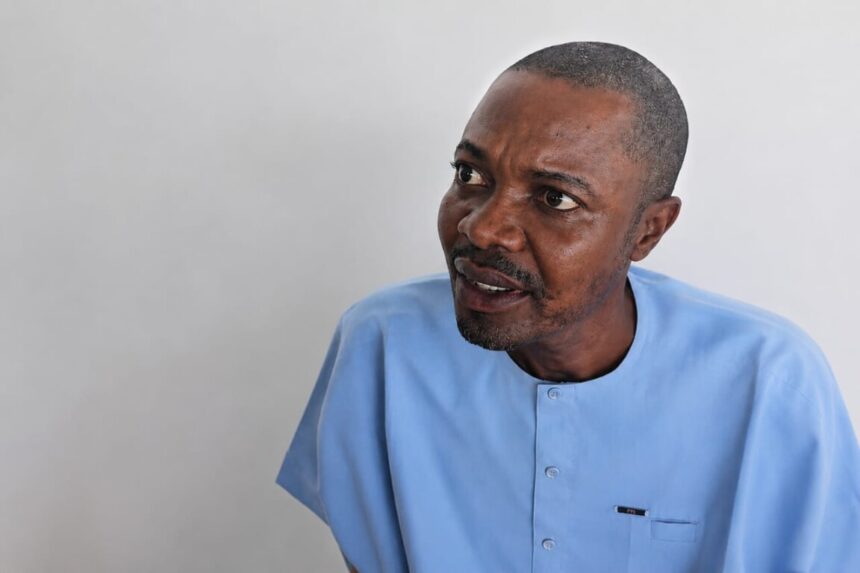
The controversy surrounding the Presidential Foreign Investment Promotion Council (PFIPC) has taken another turn as its self-appointed Director-General, Adeniyi Adeyemi, insists that his lawyers and journalists must be present when he appears before a House of Representatives committee investigating the council
The House Ad Hoc Committee, chaired by Yusuf Gagdi, is investigating how the PFIPC allegedly secured government office space and received more than ₦1.32 billion in the 2026 Appropriation Act despite questions over its legal status
Adeyemi is currently in police custody over the controversy and is expected to appear before the committee, although lawmakers had yet to decide where the questioning would take place as of Sunday
The House committee is examining how the PFIPC allegedly operated within government structures despite claims that it had no legal foundation
The investigation has raised wider questions about public financial management, institutional oversight and how an organisation whose legal status was reportedly unclear gained access to government facilities and processes
The committee has already heard from senior government officials, including the Head of the Civil Service of the Federation, Didi Walson-Jack, Budget Office Director-General Tanimu Yakubu, Central Bank of Nigeria Director of Banking Services Hamisu Abdullahi and representatives of the Inspector-General of Police
Their testimonies reportedly raised questions about how Adeyemi presented himself as the head of the PFIPC and obtained recognition within government circles
Adeyemi Wants Lawyers and Journalists Present
Adeyemi has indicated through his legal representatives that he is willing to answer questions from the committee
However, he has objected to what his lawyers described as a closed-door interrogation at an undisclosed location while he remains in police custody
His lawyer, Ademola Oyedokun, said Adeyemi should be allowed to respond publicly because other people involved in the matter had already given their accounts in public
A family source also said Adeyemi would only submit to questioning if journalists and his legal representatives were allowed to attend
According to the source, the committee initially indicated that journalists could attend before later changing its position, leading Adeyemi to maintain that he would not answer questions without the media present
Committee Defends Its Position
The House committee had earlier announced plans to question Adeyemi while he remained in police custody
Chairman Yusuf Gagdi explained that the arrangement was intended to prevent the House investigation from interfering with ongoing investigations by the Nigeria Police Force, the Economic and Financial Crimes Commission and the Independent Corrupt Practices and Other Related Offences Commission
Gagdi also said lawmakers could not override a court order directing Adeyemi’s detention and stressed that the National Assembly would not undermine the judiciary or the principle of separation of powers
The committee later attempted to question Adeyemi, but he declined to respond, leading lawmakers to reschedule the interrogation
CUPP Questions the ICPC Findings
The controversy has also attracted criticism from the Coalition of United Political Parties (CUPP), which rejected the reported findings of the ICPC investigation
CUPP spokesperson Agu Bryan described the report as inadequate and questioned how Adeyemi could have operated an organisation of such scale without assistance from officials or institutions within government
Bryan argued that investigators should examine the roles of institutions mentioned in Adeyemi’s correspondence, including the Office of the Secretary to the Government of the Federation, the Central Bank of Nigeria and the Office of the Head of the Civil Service of the Federation
The coalition also questioned how the PFIPC allegedly found its way into the national budget if the organisation had no legal foundation
It called on the National Assembly and relevant government ministries to explain how public funds were appropriated to an organisation whose legal status had reportedly not been established
Questions Over Alleged Forged Documents
Another major issue in the investigation involves an alleged forged signature attributed to the Chief of Staff to the President, Femi Gbajabiamila
CUPP said the finding should lead investigators to examine other official documents and correspondence allegedly used by Adeyemi
The coalition also wants investigators to determine how the PFIPC gained enough official recognition to participate in government activities and appear in the national budget
The broader investigation includes allegations of impersonation, forgery, financial impropriety and unlawful use of government facilities and official insignia
The Bigger Question
The PFIPC controversy now extends beyond the actions of one individual
The House committee is expected to hear directly from Adeyemi as it investigates how the council was created, how it operated, who recognised it and whether public funds were allocated or spent in connection with its activities
The outcome could therefore determine whether the controversy involved only an individual allegedly presenting himself as the head of a government body or whether failures within government institutions also allowed the PFIPC to gain access and recognition
For Adeyemi, the immediate issue is whether he will be questioned publicly and with his lawyers present
For the House, the bigger task is to establish how an organisation whose legal status is under scrutiny could secure government accommodation, participate in official processes and receive a ₦1.32 billion budgetary allocation
The PFIPC investigation therefore raises a wider question about Nigeria’s public institutions: How did the alleged council gain access to government systems for so long, and who was responsible for checking its legal status?