
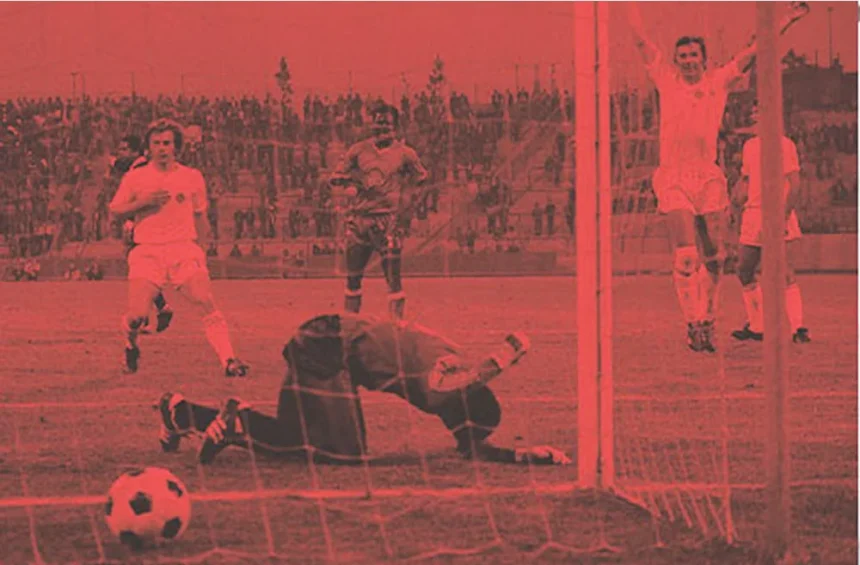
It was a warm afternoon in Spain on June 15, 1982, but what unfolded inside the stadium quickly turned into one of the most one-sided nights in World Cup history.
Hungary tore through El Salvador with relentless attacking football and ended the match with a stunning 10-1 victory.
Even after 44 years, that result still stands as the largest number of goals scored by a single team in a men’s World Cup match. It also remains one of the biggest winning margins the tournament has ever seen.
Hungary wasted no time asserting control. They moved the ball with speed, pulled El Salvador’s defence out of shape, and created chance after chance with ease. By the time El Salvador settled, the damage had already started.
The Central American side struggled to cope with Hungary’s movement and finishing. Every defensive mistake carried punishment. Every loose ball turned into another attack.
By halftime, Hungary had already taken full control of the game, and the scoreline reflected the gap in quality on the pitch. El Salvador spent much of the match chasing shadows as Hungary kept pressing forward.
Then came one of the most memorable individual performances in World Cup history. László Kiss entered the match from the bench in the second half and changed the rhythm of the game completely.
Kiss needed just seven minutes to score a hat-trick. His goals came in quick succession, each one increasing Hungary’s dominance and deepening El Salvador’s collapse.
That performance still holds two remarkable records. It remains the only hat-trick ever scored by a substitute in a World Cup match, and it is still the fastest hat-trick in tournament history.
Hungary’s performance in 1982 was not an isolated moment in football history. It reflected a long tradition of dominance that stretched back decades.
In 1954, Hungary crushed South Korea 9-0 at the World Cup. That team formed part of the legendary “Golden Team,” widely regarded as one of the greatest sides football has ever seen.
Players like Ferenc Puskás, Sándor Kocsis, Nándor Hidegkuti, Zoltán Czibor, József Bozsik, and goalkeeper Gyula Grosics defined an era. They combined technical skill with tactical intelligence and overwhelmed opponents across Europe and beyond.
Under coach Gusztáv Sebes, Hungary became a symbol of attacking football. They scored freely, moved fluidly, and often left opponents unable to respond.
World football has seen other heavy defeats, but few come close to Hungary’s record. Yugoslavia beat Zaire 9-0 in 1974 after racing into a three-goal lead within 20 minutes. Sweden also delivered an 8-0 knockout win over Cuba in 1938, a match that produced rare double hat-tricks.
Uruguay recorded an 8-0 win over Bolivia in 1950, with Óscar Míguez scoring three goals. Germany matched the scoreline in 2002 against Saudi Arabia, with Miroslav Klose announcing himself on the world stage through a hat-trick performance.
Yet none of those matches surpassed what Hungary achieved in 1982. The 10-1 scoreline still stands untouched, unmatched, and unrepeated in World Cup history.
More than four decades later, the match remains a reminder of how quickly football can turn into history when everything clicks for one side and collapses for the other.