
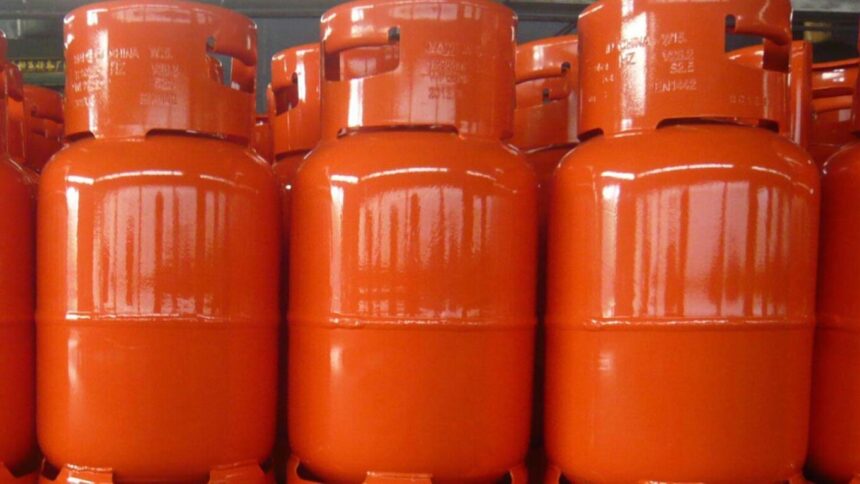
Cooking gas marketers have begun plans to import large volumes of Liquefied Petroleum Gas (LPG) to ease supply shortages and bring down soaring prices across Nigeria.
The price of cooking gas has risen by about 140 per cent, climbing from around N1,000 per kilogramme earlier this year to as much as N2,400 per kilogramme in many parts of the country.
Industry sources said local producers can no longer meet growing demand, prompting the Nigerian Midstream and Downstream Petroleum Regulatory Authority (NMDPRA) to support increased LPG imports.
Sources also attributed the shortage to reduced LPG supply from the Dangote Petroleum Refinery. They explained that the refinery now uses more LPG internally after increasing its production capacity to about 700,000 barrels per day. They dismissed claims that exports caused the shortage, noting that the Federal Government still enforces restrictions on LPG exports.
Louis Ibah, spokesperson for the Minister of State for Petroleum Resources (Gas), Dr Ekperikpe Ekpo, said marketers have committed to importing larger volumes of LPG to improve supply in the coming weeks.
He added that the minister has directed the NMDPRA and industry stakeholders to address supply challenges and ensure steady availability of cooking gas. The government has also urged the Dangote refinery to allocate more LPG to the domestic market.
The National President of the Nigerian Association of Liquefied Petroleum Gas Marketers, Edu Inyang, confirmed that depot owners are making arrangements to import enough LPG to ease the scarcity.
Despite government assurances, many retailers say shortages persist, while consumers continue to struggle to buy cooking gas. As a result, some households have returned to using charcoal and firewood for cooking.
Although local refineries and gas processing plants supplied most of Nigeria’s LPG between April 2025 and April 2026, the increase in domestic production has yet to translate into lower prices.
Industry stakeholders warn that unless supply improves quickly, rising costs could place even greater pressure on Nigerian households.