The Federal Government, FG, has directed financial institutions, designated non-financial businesses and professions to fully comply with sanctions regulations by freezing the assets of individuals and organisations linked to terrorism financing.
The directive follows sanctions imposed by the United States government on a Nigerian businessman, Mukhtar Adamu Muhammad, for allegedly financing the Islamic State (ISIS).
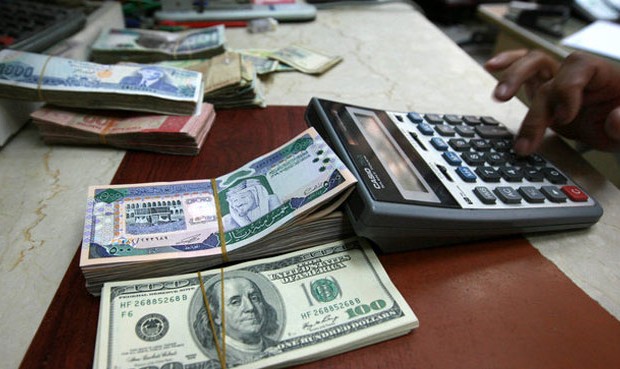
The US Department of the Treasury, through the Office of Foreign Assets Control (OFAC), sanctioned Muhammad, 35, and three Bureau De Change (BDC) operators — Generation Currency Bureau De Change Limited, Nine to Nine Exchange Bureau De Change Limited and Manhattan Bureau De Change Limited.
US authorities accused the Lagos-based financier and the companies of moving funds for ISIS as part of a wider network operating across Europe, the Middle East and West Africa.
Nigeria Expands Sanctions List
On June 18, 2026, Nigeria added six individuals and one company to its sanctions list.
The individuals are Ibrahim Yakubu Ogirima, Adamu Chiroma, Ibrahim Abubakar, Abdullahi Umar Usman, Babangida Muhammed and Adamu Hammajam.
Authorities also listed Abbal Bako & Sons Bureau De Change Limited.
Reacting to the US sanctions, the Nigerian Sanctions Committee directed all financial institutions and designated non-financial businesses and professions to comply with sanctions obligations.
The committee instructed institutions to freeze assets linked to sanctioned persons, file Suspicious Transaction Reports and report any matches to the appropriate authorities.
The committee said the US action reinforced sanctions already imposed by Nigeria and demonstrated a coordinated effort to disrupt financial networks that support terrorist groups and extremist organisations.
“Nigeria remains resolute in its commitment to ensuring that terrorists and their financiers find no safe haven within the country’s financial system,” the committee stated.
The committee said intelligence gathering, financial investigations and inter-agency assessments provided sufficient grounds to sanction the affected individuals and entities.
According to the committee, investigators found evidence that the sanctioned persons and organisations financed, supported or facilitated the activities of the Islamic State West Africa Province (ISWAP) and related terrorist networks.
The committee praised the Federal Ministry of Justice, the Office of the National Security Adviser, the Central Bank of Nigeria, the Department of State Services (DSS), the Economic and Financial Crimes Commission (EFCC) and the Nigerian Financial Intelligence Unit (NFIU) for supporting efforts to block funding channels used by terrorist groups.
It also reaffirmed Nigeria’s commitment to working with local and international partners to combat terrorism financing and strengthen the integrity of the financial system.
Meanwhile, the Chief of Defence Intelligence, Lieutenant General Emmanuel Undiandeye, said Nigerian forces had significantly weakened terrorist groups operating in the country.
Speaking during the Second Quarter Operations Briefing for Foreign Defence Advisers and Attachés at Defence Intelligence Agency headquarters in Abuja, Undiandeye said Nigerian forces worked closely with allies including the United States, the United Kingdom and France.
He said military operations had eliminated several commanders and fighters from ISIS, Boko Haram and other terrorist groups.
“Our forces have assaulted, decimated and disrupted their operations. We have destroyed their logistics networks and cut off their arms and ammunition supply routes,” he said.
Undiandeye added that improved intelligence, technology and international cooperation had helped security agencies contain many of the country’s security threats.
He said the quarterly briefing aimed to provide foreign defence advisers with an accurate assessment of Nigeria’s security situation and highlight cooperation among security and intelligence agencies.
Director of Foreign Liaison, Major General Ojogbane Adegbe, said the briefing also provided an opportunity for foreign defence advisers and attachés to engage with Nigerian security agencies and discuss regional security challenges in Nigeria and the Sahel.