A Professor of Language and Linguistics at the University of Maiduguri, Professor Khalifa Ali Dikwa, has criticised the Economic Community of West African States (ECOWAS) over its handling of recent military coups in the Sahel, describing the regional bloc’s approach as “obsolete” and driven by “double standards.”
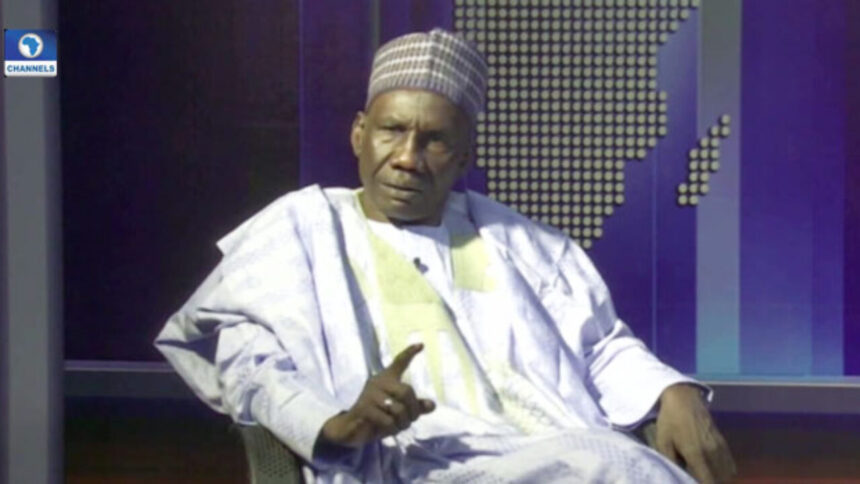
Prof Dikwa made the remarks while appearing on Sahel Watch, a programme on S24 Television hosted by John Coster, where he analysed the political crisis affecting West Africa, particularly the growing divide between ECOWAS and military-led governments in the Sahel region.
According to him, ECOWAS has shifted from its original purpose of protecting regional stability and citizens’ interests to becoming an organisation focused on defending political leaders in power.
“ECOWAS became a club of sitting heads of state, protecting one another against their own people, not protecting the region against bad governance,” Prof Dikwa said.
He argued that the regional body had applied inconsistent standards in responding to constitutional crises, questioning why it did not take similar actions when some civilian leaders sought controversial extensions of their tenure.
The professor cited the cases of former Guinean President Alpha Condé and Côte d’Ivoire’s President Alassane Ouattara, who both faced criticism over attempts to secure third terms in office. He argued that ECOWAS remained relatively silent in those situations but moved aggressively against military takeovers in Niger, Mali and Burkina Faso.
Prof Dikwa also criticised the international response to events in Chad, describing the transition that brought Mahamat Idriss Déby to power after the death of his father, Idriss Déby, as a “dynastic coup.”
He questioned France’s position on coups in the region, accusing the country of applying different standards depending on its interests.
“The same France that is condemning the coup in Niger, Mali, and Burkina Faso, was there in N’Djamena to inaugurate a dynastic coup. Double standards,” he said.
On the sanctions imposed on Niger following the 2023 military takeover, Prof Dikwa described the measures as “inhuman” and contrary to ECOWAS principles.
He argued that restricting access to electricity, medicine and food supplies negatively affected ordinary citizens rather than political actors.
“You cannot cut off electricity, you cannot stop medication, you cannot stop food from going to landlocked countries,” he said.
Prof Dikwa also assessed Nigeria’s initial support for possible military intervention in Niger, saying the plan lacked domestic backing and collapsed before implementation.
He pointed to opposition from the Nigerian Senate, northern elders and sections of the public as factors that prevented military action.
“Because we share a 1,500-kilometer border with Niger. They are our brothers, our sisters. We share the same culture, the same religion, the same language… you cannot expect us to go to war with ourselves to satisfy Paris or Washington,” he said.
The professor further warned that the withdrawal of Mali, Burkina Faso and Niger from ECOWAS and their formation of the Alliance of Sahel States (AES) represented a major setback for regional integration.
He blamed what he described as poor leadership and ineffective diplomacy for the growing separation between ECOWAS and the Sahel countries.
“The exit of Mali, Burkina Faso, and Niger to form the Alliance of Sahel States is a heavy blow to the integration of the sub-region,” Prof Dikwa said.
The comments come amid ongoing debates over the future of ECOWAS, its role in promoting democracy, and the effectiveness of sanctions and diplomatic pressure in addressing political instability across West Africa.