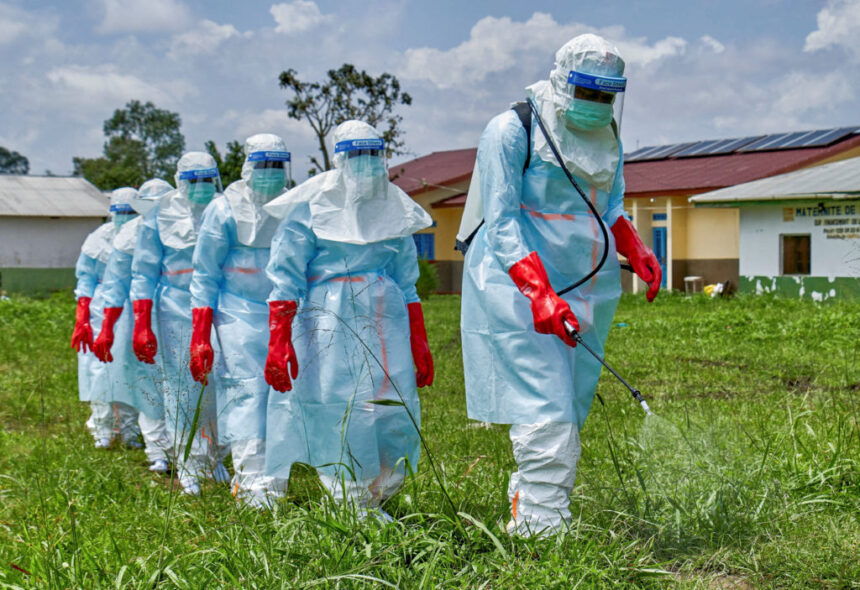
The Democratic Republic of Congo is battling the deadliest Ebola outbreak in its history, with more than 2,300 people confirmed dead and thousands more infected.
Health authorities say 2,325 people had died from Ebola as of August 16, 2026, while 4,945 confirmed cases had been recorded. The latest figures have pushed the current outbreak beyond the previous record of 2,299 deaths recorded during the 2018 to 2020 Ebola epidemic.
The outbreak was officially declared on May 15, 2026, after laboratory tests confirmed the presence of the Bundibugyo strain of Ebola in Ituri Province.
The World Health Organization says the outbreak is now affecting six of the Democratic Republic of Congo’s 26 provinces, with Ituri remaining the main epicentre. Health authorities recorded 101 new confirmed cases in a single 24-hour period, highlighting the rapid pace at which the virus is spreading.
The Bundibugyo strain is particularly concerning because it is rare and has only caused a small number of previously documented outbreaks. Unlike the Zaire strain, which has been responsible for several major Ebola epidemics, there is currently no licensed vaccine or specific treatment approved for Bundibugyo Ebola.
The WHO says the outbreak is taking place against a difficult backdrop of insecurity, population movement, limited health infrastructure and humanitarian pressures. These challenges have made it harder for health workers to identify cases early, trace contacts and provide timely treatment.
The outbreak has also crossed Congo’s borders. Uganda recorded cases linked to transmission originating in the Democratic Republic of Congo, while an infected humanitarian worker was treated in Germany after being evacuated from Congo.
Health experts say the high death toll is not necessarily an indication that the Bundibugyo virus itself is more deadly than other Ebola strains. Instead, delayed diagnosis and treatment have contributed significantly to the rising fatality rate. Reuters reported that the case fatality ratio increased from about 20 percent in early June to approximately 46 percent by August 16.
The WHO and Congolese authorities are stepping up surveillance, laboratory testing, contact tracing, infection prevention and control, treatment services and community engagement. The international response also includes preparations to limit further cross-border transmission.
Scientists are meanwhile working to develop vaccines and treatments specifically targeting the Bundibugyo strain. Experimental candidates are being evaluated, but health authorities stress that these efforts are still at an early stage.
Ebola is a rare but highly infectious viral disease. It can cause fever, severe weakness, headache, vomiting, diarrhoea and, in serious cases, bleeding and organ failure. Transmission mainly occurs through direct contact with the blood or other bodily fluids of an infected person, or through contaminated materials.
The current epidemic is the 17th Ebola outbreak recorded in the Democratic Republic of Congo since the virus was first identified there in 1976.
With new infections continuing to emerge, authorities face the difficult task of slowing transmission while maintaining access to treatment and protecting health workers.
For communities in affected areas, health officials continue to stress the importance of early reporting of suspected cases, avoiding contact with infected bodily fluids and following public-health guidance.