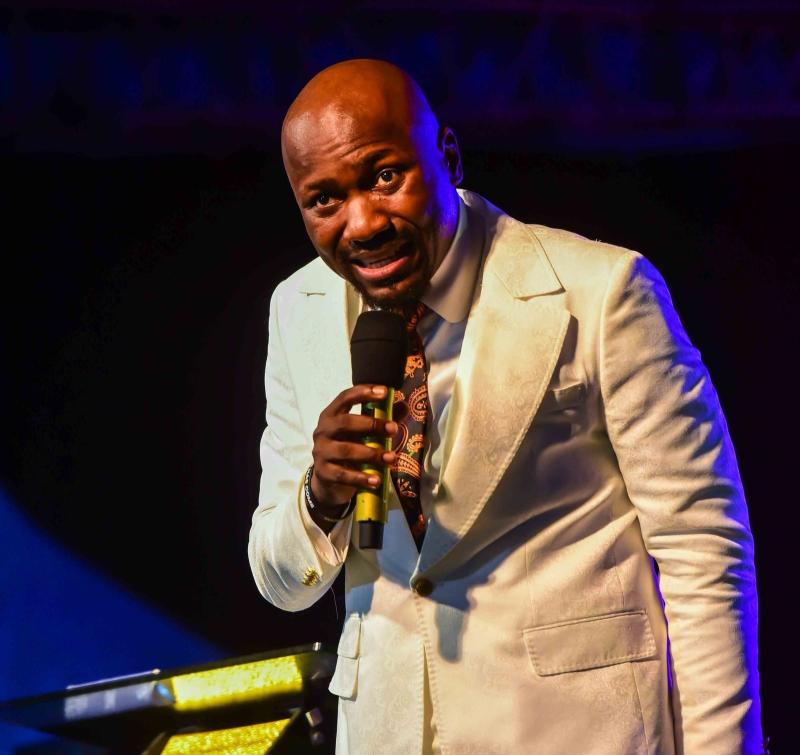
Apostle Johnson Suleman, General Overseer of Omega Fire Ministries has challenged Nigerians to look beyond bad leadership when discussing the country’s corruption problem.
Speaking during his Sunday service on August 9, 2026, Suleman argued that corruption is not only a problem among political leaders and public officials, according to the cleric, corruption cuts across different levels of Nigerian society, from ordinary citizens to those in positions of power.
He said the problem exists “from bottom to top” and extends from the village to the villa and urged Nigerians to examine their own actions instead of placing all the blame on government leaders.
The preacher’s message focused on personal responsibility and the need for Nigerians to reject dishonest practices.
He argued that changing political leaders alone would not solve the country’s problems if citizens continue to engage in corrupt practices.
Suleman said Nigerians must also look at their own behavior and ask whether they contribute to the culture they often criticize in government.
Corruption remains one of Nigeria’s biggest public concerns. The issue often comes up in discussions about government contracts, public funds, elections and abuse of office, but Suleman’s message shifts attention to everyday actions by ordinary citizens.
His argument suggests that corruption should not only be viewed through the actions of politicians and senior public officials, he said that small acts of dishonesty, abuse of public resources, bribery and taking what does not belong to someone can also weaken trust in society.
For Suleman, tackling corruption therefore requires a change in personal values as well as reforms in government.
The cleric’s call comes at a time when Nigerians continue to demand better leadership and stronger accountability from public officials, but his message asks citizens to also accept responsibility so rather than asking only what government can do differently, Nigerians must also consider what they can change in their homes, workplaces, businesses and communities.
The call to “stop stealing” therefore goes beyond government corruption, it is a call for honesty at every level of society.
This is not the first time Suleman has used his platform to comment on Nigeria’s political and social problems.
In 2023, he criticized the conduct of Nigeria’s general elections and warned Nigerians not to copy the negative behavior of politicians. He also spoke against tribalism and urged citizens to uphold good values.
In 2019, Suleman also said he had criticized previous administrations and described his position as an attempt to “speak truth to power.”
His latest message, however, places more emphasis on the role of ordinary Nigerians in the country’s corruption problem.
Government institutions have a major role to play in preventing corruption and holding offenders accountable, but citizens also make daily choices that shape society.
For Suleman, the change must therefore start with individuals and his message to Nigerians was direct, stop stealing.