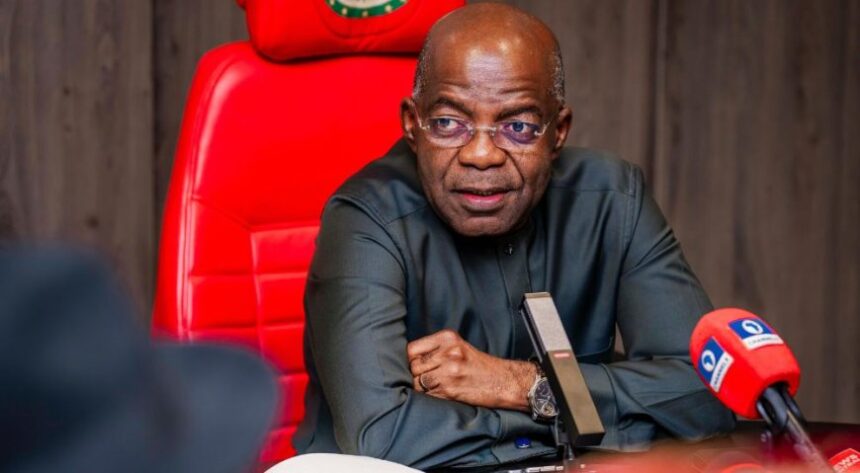
A claim circulating on social media has ignited fresh debate over the financial management of Abia State under Governor Alex Otti, with supporters touting a dramatic reduction in the state’s debt profile.
The post, shared by Tony Ajah on X (formerly Twitter), alleges that the Otti administration cut Abia’s debt from ₦191.2 billion to ₦48.4 billion in less than three years.
According to the claim, this was achieved through the repayment of about ₦142 billion, without the state taking on new loans.
The assertion has drawn praise from some quarters, where it is being cited as evidence of prudent fiscal management and governance.
Advocates argue that if accurate, such a reduction would represent one of the most aggressive debt repayment efforts by any subnational government in Nigeria in recent years.
However, analysts urge caution, noting that the figures require independent verification. Key questions remain around the composition of the debt figures cited, whether they reflect total liabilities or only specific components such as domestic debt.
Experts also point out that changes in debt profiles can result from restructuring, refinancing, or reclassification, not just outright repayment.
There are also concerns about the claim that the state “hasn’t borrowed a dime,” a statement observers describe as difficult to validate without access to detailed budget records, Debt Management Office data, and audited financial statements.
As public interest grows, financial transparency advocates say official clarification from the Abia State Government and supporting documentation will be critical in determining the accuracy of the claims and providing a clearer picture of the state’s fiscal position.