


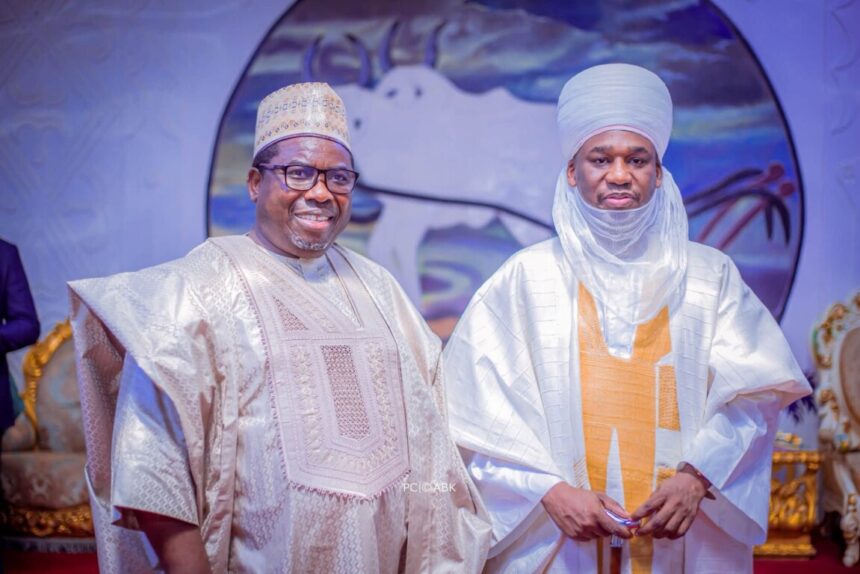
As Nigeria approaches the 2027 general elections, the Emir of Gombe, Abubakar-Shehu Abubakar III, has called on traditional rulers to maintain political neutrality and resist attempts by politicians to use traditional institutions for partisan interests.
The emir made the position known during a visit by the Chairman of the Independent National Electoral Commission (INEC), Professor Joash Amupitan, to his palace in Gombe State.
He stressed that traditional rulers belong to no political party and must serve their communities regardless of political affiliation, religious beliefs or social background.
According to him, royal fathers have a responsibility to preserve community unity and ensure that political differences do not undermine peaceful coexistence.
He said traditional institutions recognise the importance of free and peaceful elections to Nigeria’s stability, unity and development.
The emir’s remarks come amid growing concerns over the relationship between traditional institutions and political actors, particularly as politicians are expected to intensify consultations with royal fathers ahead of the 2027 elections.
During the visit, Amupitan urged traditional rulers to support INEC’s preparations by encouraging eligible voters to collect their Permanent Voter Cards (PVCs), promoting peaceful participation and discouraging electoral violence.
He disclosed that the North-East has approximately 19.96 million registered voters, representing 13.51 per cent of Nigeria’s total registered voters.
The INEC chairman also called on traditional rulers to help address misinformation and disinformation capable of creating panic, undermining public confidence and disrupting the electoral process.
Amupitan reaffirmed the commission’s commitment to conducting free, fair, inclusive and credible elections, insisting that INEC has no preferred candidate.
However, the emir’s declaration has renewed conversations about the challenges traditional rulers face in maintaining independence in a political environment where their recognition, appointments and institutional relationships may involve state governments.
Some residents who spoke on the issue raised concerns about alleged instances in which political disagreements between governors and their predecessors affected relationships between political actors and traditional institutions.
They argued that traditional rulers must be allowed to discharge their responsibilities without political intimidation or pressure.
As the 2027 elections approach, the challenge for traditional institutions will be to demonstrate that their palaces remain open to competing political interests and that their authority serves the entire community rather than individual political ambitions.
Ultimately, the credibility of traditional institutions will depend not only on their declarations of neutrality but also on their ability to demonstrate fairness, independence and impartiality in practice.