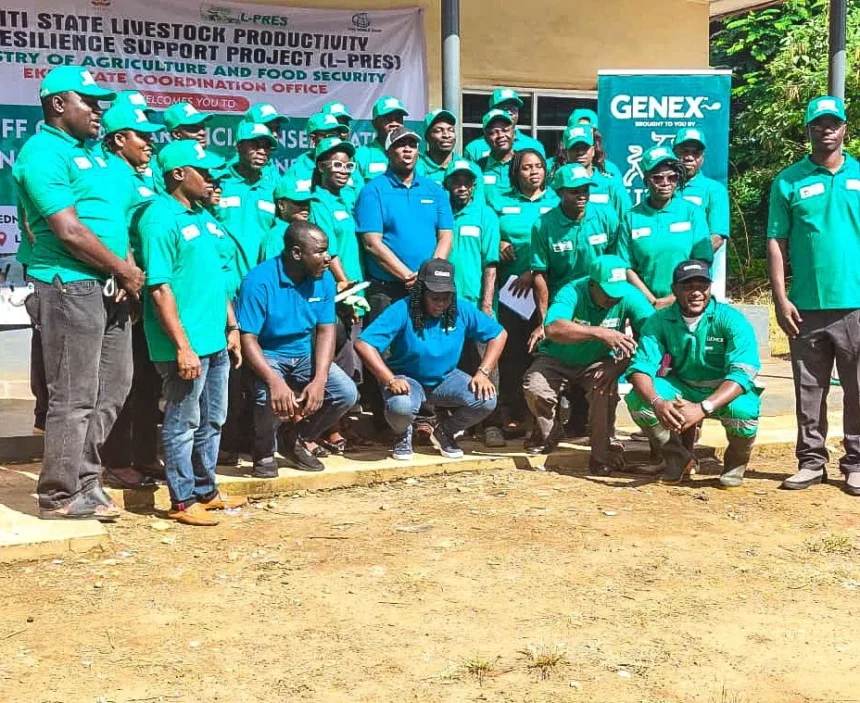
The Ekiti State Government has trained 30 officers in artificial insemination to improve livestock production and support farmers.
The training is part of the state’s Livestock Productivity and Resilience Support Project, L-PRES.
The government also plans to carry out artificial insemination on 850 cows and 150 goats under the programme.
The Commissioner for Agriculture and Food Security, Ebenezer Boluwade, disclosed this in Ado Ekiti.
He spoke during the Mass Artificial Insemination, Training and Induction of Inseminators programme.
Boluwade said the government selected the trainees from the Animal Husbandry and Veterinary departments.
He said the officers would receive training as artificial insemination technicians.
According to him, the programme will improve livestock breeds and increase meat and milk production.
Boluwade said the government conducted a survey among L-PRES beneficiary farmers.
The survey found that poor animal genetics affected livestock production.
Farmers reported low milk yields and slow animal growth.
They also faced low market value for some livestock.
The commissioner said artificial insemination could help solve these problems.
The method allows farmers to introduce improved genetic traits into local livestock.
As a result, farmers could get animals with better growth and higher milk production.
The technology could also improve the quality of meat produced in the state.
Boluwade said artificial insemination could reduce the spread of sexually transmitted diseases among livestock.
It reduces the need for direct mating between animals.
He added that the technology would also give farmers access to improved breeding materials.
The Lead Consultant of Genex Urus Company, Olayiwola Adekunle, said the training would build local expertise.
He said Ekiti should not depend on professionals from outside the country for artificial insemination services.
Adekunle said Genex would support the 30 trained inseminators for three years.
The support will help the technicians gain practical experience and sustain the programme.
He added that the project would cover livestock farmers across different local government areas.
The programme could reach at least 1,000 animals, including cattle and goats, as it expands.
According to Adekunle, the long-term goal is to increase livestock numbers and improve milk and beef production.
The Ekiti L-PRES Animal Husbandry Officer, Olumuyiwa Adelodun, said the programme would improve local livestock breeds.
He said the production of some local breeds had declined over the years.
Adelodun explained that artificial insemination could improve the quality of these animals.
It could also increase their productivity and market value.
The state government said it would continue to support livestock farmers through training and infrastructure.
It will also focus on market development and access to finance.
The initiative forms part of Ekiti State’s wider efforts to strengthen livestock production.
The government also hopes to improve food security and create better economic opportunities for farmers.