About 110 million Nigerians are currently without adequate housing, Minister of Housing and Urban Development, Muttaqha Rabe Darma, has said, highlighting the enormous scale of Nigeria’s housing crisis.
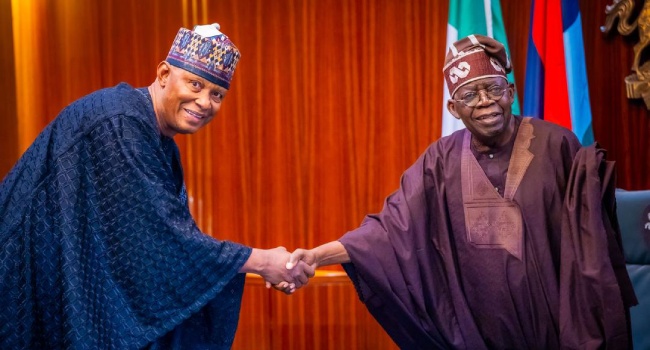
Darma disclosed the figure while speaking at the presentation of allocation letters to eligible staff of the Nigerian Midstream and Downstream Petroleum Regulatory Authority (NMDPRA) under the Federal Government’s Renewed Hope Cities and Estates Programme.
According to the minister, Nigeria requires more than 16 million housing units to address the deficit and provide decent accommodation for millions of citizens.
“Providing housing to 110 million unhoused Nigerians is a task, a very big one,” Darma said, stressing that every opportunity to deliver homes to Nigerians remains important.
The minister said the housing initiative for NMDPRA workers should not be viewed merely in terms of the number of houses being delivered, but as part of a broader effort to expand access to affordable housing.
The NMDPRA Chief Executive, Rabiu Umar, said about 430 members of staff in Abuja, Kano and Lagos were receiving allocation letters under the programme.
The development comes as housing affordability continues to pose a major challenge for Nigerian households. Darma has also expressed concern over the rising cost of construction and the proportion of workers’ income consumed by rent.
The Federal Government recently said it was working towards reducing the share of workers’ income spent on rent, with the minister noting that some workers currently spend between 40 and 60 per cent of their earnings on accommodation.
Government Reviews Abandoned Housing Projects
The housing crisis is occurring alongside efforts by the Federal Government to recover abandoned housing projects across the country.
The Ministry of Housing and Urban Development says it is reviewing abandoned federal housing projects, with plans to rehabilitate, upgrade and complete viable developments and make them available to Nigerians.
The minister made the commitment during an inspection of an abandoned National Housing Programme estate in the Kubwa-Karsana area of the Federal Capital Territory.
Darma said public housing projects funded with taxpayers’ money should not remain abandoned while millions of Nigerians require accommodation.
Government Puts Housing Deficit at About 15–16 Million Units
The exact size of Nigeria’s housing deficit has been the subject of different estimates.
In July 2026, the Federal Ministry of Information reported that a technical committee working with the Ministry of Housing and Urban Development had adopted internationally recognised methodologies and arrived at a core national housing deficit of approximately 15 million housing units.
The proposed methodology includes the World Bank Adequate Housing Index and the UN-Habitat Household Crowding Index.
The difference between the estimated number of people requiring adequate housing and the number of housing units needed is important. The figures should therefore not be interpreted as meaning that 110 million separate houses are required.
Rather, the minister’s statement describes the number of Nigerians who are considered unhoused or inadequately housed, while the housing-deficit figure refers to the estimated number of additional housing units required.
Housing Beyond Home Ownership
Nigeria’s housing challenge goes beyond the availability of buildings.
Affordability, access to mortgage finance, land administration, construction costs, infrastructure and urban planning all influence whether Nigerians can obtain decent housing.
The Housing Ministry has identified weaknesses in Nigeria’s mortgage system as one of the sector’s challenges. It has proposed reforms involving mortgage finance, access to the National Housing Fund, participation by informal-sector workers and greater opportunities for diaspora investment.
The ministry is also proposing stronger regulation of developers and estate agents, escrow arrangements to protect homebuyers, improved construction standards and better land administration.
These reforms are intended to address some of the structural problems that have made housing difficult to access and, in some cases, exposed prospective homeowners to fraudulent transactions and failed developments.
A National Development Challenge
Nigeria’s housing crisis has implications beyond shelter.
High housing costs affect household disposable income and can influence spending on food, education, healthcare and transportation. For workers living far from their workplaces because of the cost of accommodation, transportation expenses can further increase the effective cost of living.
The Federal Government has linked excessive rent burdens to wider household pressures, arguing that workers who spend a large proportion of their legitimate income on accommodation may have less money available for other family responsibilities.
Addressing the housing deficit will therefore require more than constructing estates.
It will require a coordinated approach involving affordable financing, lower construction costs, improved land administration, infrastructure development, urban planning, stronger regulation and increased private-sector participation.
For a country with an estimated 110 million people lacking adequate housing and a housing deficit running into millions of units, the challenge is enormous.
The government’s ability to turn its housing programmes, abandoned projects and proposed sector reforms into affordable and accessible homes will be crucial in determining whether its housing agenda produces measurable improvements in the lives of ordinary Nigerians.