
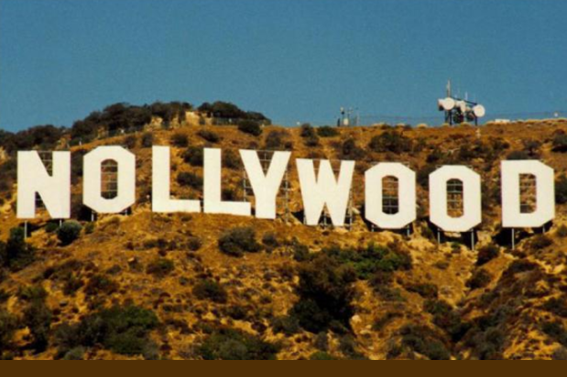
Today, the Nigerian film industry is one of the most recognisable film industries in Africa, but Nollywood did not appear overnight, its roots stretch back almost a century, passing through colonial cinema, television drama, indigenous theatre, the home-video revolution and, eventually, the digital and streaming era.
The origins of the word “Nollywood” are not completely settled.
The term is generally associated with the combination of Nigeria and Hollywood, following the naming pattern used for other major film industries.
Japanese journalist Norimitsu Onishi helped popularised the term internationally through a 2002 New York Times article about Nigeria’s film industry but it isn’t determined that he was the one that coined the name.
1926: Nigeria’s First Feature Film
The history of filmmaking in Nigeria goes back to the colonial period. One important milestone came in 1926, when British filmmaker Geoffrey Barkas produced Palaver. The film featured Nigerian actors and is widely identified in Nigerian cultural records as the country’s first feature film.
However, this was not yet Nollywood as we know it today. The industry was still largely shaped by colonial structures and foreign production.
After Independence: Nigerian Stories Take Centre Stage
Nigeria gained independence in 1960, and the country’s film and television culture gradually became more Nigerian.
The development of television drama and indigenous theatre created opportunities for Nigerian actors, writers, directors and producers.
Government policies also affected the cinema industry. Following the 1972 indigenisation policy, ownership of many cinema businesses shifted towards Nigerians, helping create greater space for indigenous participation in the sector.
The 1970s produced important Nigerian filmmakers and productions.
Kongi’s Harvest, released in 1970, was an important milestone. The film was based on Wole Soyinka’s play and was produced by an indigenous Nigerian company.
Filmmakers such as Ola Balogun and Herbert Ogunde also played important roles in developing Nigerian cinema.
The 1980s: Television and Popular Culture
The 1980s brought another important development.
Nigerian television became an increasingly powerful platform for local entertainment. Comedy, drama and theatre productions reached large audiences through television.
Films such as Wale Adenuga’s Papa Ajasco and Moses Olaiya’s Mosebolatan became popular examples of Nigerian screen entertainment during the period. But the biggest transformation was still to come.
1992: The Home-Video Revolution
The early 1990s changed Nigerian filmmaking forever.
Economic difficulties, limited cinema infrastructure and the availability of relatively affordable video technology encouraged filmmakers to experiment with direct-to-video productions. Then came Living in Bondage, produced by Kenneth Nnebue and released in 1992.
The film became a landmark in Nigerian film history and helped ignite the home-video boom. Instead of waiting for expensive cinema production and distribution systems, filmmakers could produce films on video and sell them directly to audiences.
This created a new commercial model. Films such as Glamour Girls, Nneka the Pretty Serpent, RattleSnake, Domitilla, Diamond Ring and Karishika followed and became part of the rapidly expanding video-film culture.
UNESCO identifies the early 1990s as a crucial period in the development of the Nigerian home-video industry.
The 1990s and 2000s: Nollywood Explodes
By the early 2000s, Nollywood was producing films at extraordinary volume. UNESCO notes that production reached as many as 50 films a week, with more than 2,500 titles a year during the industry’s peak home-video period.
The films were often made on small budgets and with short production schedules. This became both Nollywood’s strength and one of its major criticisms.
The industry could produce films quickly and cheaply, but critics often complained about weak production values, repetitive storylines and rushed productions. Yet audiences kept watching.
Nollywood Becomes an African Cultural Force
Nollywood’s influence went beyond entertainment.
Its films presented Nigerian languages, fashion, music, family life, religion, traditions, relationships and social issues to audiences across Africa and the diaspora. The industry also created opportunities for thousands of actors, directors, writers, producers, editors, marketers and other professionals. In many ways, Nollywood developed its own model rather than simply copying Hollywood.
UNESCO describes it as an industry that created its own local production and distribution model, driven by digital technology and entrepreneurial activity.
The Cinema Comeback
By the 2000s, the industry began moving beyond the traditional home-video model. Filmmakers increasingly returned to cinema releases, with greater attention to production quality, cinematography, storytelling and marketing.
One major landmark was The Figurine (2009) by Kunle Afolayan. The film became an important symbol of the new wave of Nigerian cinema. Other filmmakers followed with productions designed for theatrical audiences.
This period helped establish a more polished form of Nollywood filmmaking.
The Wedding Party and the New Commercial Era
The transformation continued into the 2010s.
Films such as The Wedding Party, Half of a Yellow Sun, October 1 and other commercially and critically successful productions demonstrated that Nigerian films could attract substantial cinema audiences and international attention. Nollywood was becoming more diverse. It was no longer simply associated with low-budget straight-to-video productions.
2011: IrokoTV and the Digital Shift
The internet introduced another major change.
In 2011, entrepreneur Jason Njoku launched iROKOtv, a video-on-demand service targeting Nigerian audiences and the Nigerian diaspora. The move demonstrated that Nigerian films could find new audiences online rather than relying entirely on physical copies.
The digital transition would eventually transform the entire industry.
Streaming Changes Everything
Streaming platforms brought Nollywood to an even wider international audience.
Platforms such as Netflix and Amazon Prime Video began investing in Nigerian productions and acquiring Nigerian films. Netflix launched in Nigeria in 2020, and its involvement helped increase international attention and investment in local productions.
The streaming era has also pushed parts of the industry towards larger budgets, stronger production standards and more internationally competitive storytelling.
Nollywood Today
Nollywood has become far more than the low-budget home-video industry that emerged in the 1990s.
It now includes cinema productions, television, streaming originals, independent filmmaking, digital content and international co-productions. UNESCO describes Nigeria’s film industry as one of Africa’s most prolific, producing roughly 2,500 films a year in its assessment.
Yet challenges remain.
The industry continues to face problems involving funding, piracy, distribution, infrastructure, intellectual property protection, skills development and access to cinema screens. Despite these challenges, Nigerian filmmakers continue to find new ways to tell Nigerian stories.
From Video Cassettes to Global Screens
The history of Nollywood is ultimately a story of adaptation.
Colonial cinema introduced filmmaking infrastructure.
Independence created greater space for Nigerian stories.
Television developed local talent and audiences.
The economic difficulties of the 1980s and 1990s helped push filmmakers towards affordable video production.
Living in Bondage helped trigger the home-video boom.
The internet created new distribution opportunities.
And streaming has taken Nigerian stories to global audiences.
Nollywood’s greatest achievement may therefore not simply be the number of films it produces.
It is the fact that Nigerian filmmakers built an industry around Nigerian stories, Nigerian audiences and Nigerian creativity—and eventually took those stories to the world.
From Palaver in 1926 to today’s streaming productions, the journey of Nollywood reflects almost a century of Nigerian storytelling on screen.
The industry has changed dramatically. But one thing has remained constant: Nigeria’s desire to tell its own stories.