
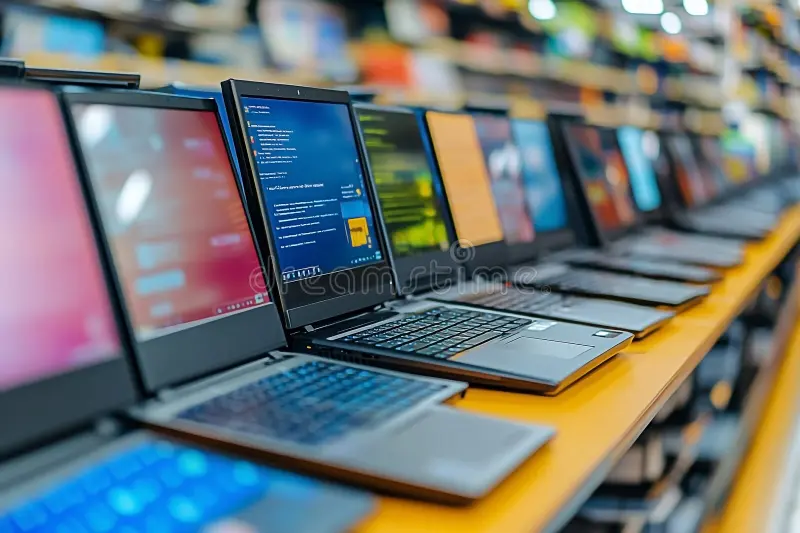
For many Nigerians, a laptop is no longer a luxury as students need it for school, workers need it for their jobs, business owners use it to run businesses every day, but buying a laptop could soon become even more expensive.
Technology research company IDC says the world may face a shortage of memory chips until 2027. Memory chips help computers work properly. When manufacturers cannot get enough of them, they make fewer laptops. When supply drops and demand stays high, prices usually go up.
Earlier, computer maker HP Inc. also warned that higher memory chip costs would make laptops more expensive.
Why Nigeria Will Feel the Impact
Nigeria imports almost every laptop sold in the country. Whether you buy an HP, Dell, Lenovo, ASUS or Apple MacBook, manufacturers make these laptops abroad before importers bring them into Nigeria. This means Nigeria depends on other countries for its computer supply.
So, when there is a problem anywhere in the global supply chain, Nigerians often pay more.
Laptop Prices Have Already Increased
A market check showed that major computer stores shows that laptop prices have already gone up. Entry-level laptops now sell for between ₦350,000 and ₦610,000. Mid-range laptops cost between ₦710,000 and more than ₦950,000.
Premium laptops cost even more.
For example:
- HP Core Ultra 7 (16GB RAM, 1TB SSD) costs about ₦1.52 million.
- HP OmniBook X Flip sells for around ₦1.37 million.
- HP OmniBook 5 Flip also costs about ₦1.37 million.
- An ASUS Ryzen 9 gaming laptop sells for about ₦2.08 million.
Prices may change as the exchange rate changes.
Why Are Prices Going Up?
Many things are making laptops more expensive.
They include:
- The global memory chip shortage.
- The weak naira.
- Higher shipping costs.
- Rising import costs.
- Inflation.
All these factors make it more expensive for companies to bring laptops into Nigeria.
Students Could Suffer the Most
Many schools now expect students to use laptops.
Students use them for:
- Online classes.
- Assignments.
- Research.
- Computer-based exams.
- Project work.
If laptop prices keep rising, many families may struggle to buy one for their children.
Businesses Will Also Feel the Pressure
Many small businesses cannot operate without a laptop.
They use computers to:
- Keep financial records.
- Talk to customers.
- Advertise online.
- Design graphics.
- Create videos.
- Build websites.
If laptops become more expensive, many business owners may delay buying new ones. They may continue using old computers that work slowly.
Some Laptops Could Become Hard to Find
IDC says some laptop models may become harder to buy if the shortage continues. Computer companies may send more products to bigger markets like the United States and Europe. That could leave countries like Nigeria with fewer choices and longer waiting times.
Demand Is Still High
People around the world still want more computers. Artificial Intelligence (AI), remote work and digital businesses have increased the demand for powerful laptops. This means manufacturers must meet growing demand while dealing with limited supplies.
Can Nigeria Reduce the Problem?
Experts believe Nigeria can protect itself better in the future.
They say the country should:
- Assemble more computers locally.
- Support Nigerian technology companies.
- Make it easier for genuine importers to access foreign exchange.
- Encourage more local production.
These steps may not stop global shortages, but they could reduce their impact on Nigerians.
The Bottom Line
For now, there is no quick solution. Unless memory chip supplies improve and the naira becomes stronger, laptop prices will likely continue to rise. This is no longer just about buying a computer.
It will affects education.
It will affects businesses.
It will affects jobs.
It will affects Nigeria’s digital future.