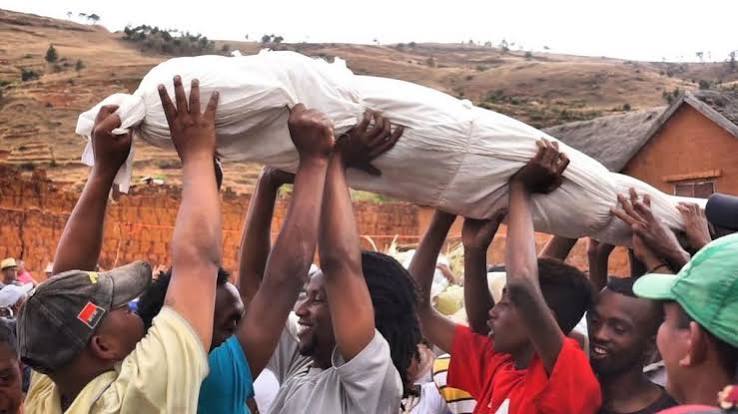
Videos from Madagascar often go viral because they show people dancing with wrapped human remains. Many viewers find the scenes surprising or difficult to understand. However, the tradition has deep cultural roots and carries great meaning for the communities that practice it.
Known as Famadihana, or The turning of the bones the ceremony celebrates family, remembrance, and respect for ancestors. It has existed for generations and remains an important tradition in parts of Madagascar.
During the ceremony, families gather to honour their deceased relatives by reopening ancestral tombs. They carefully remove the remains and wrap them in fresh silk cloth known as lamba. The new cloth symbolises renewal and continued respect for the dead.
After rewrapping the remains, relatives carry them while musicians play traditional songs. Family members dance, sing, and celebrate together instead of mourning. They also share memories and stories about loved ones who have passed away.
Many people speak directly to their ancestors during the ceremony. They tell them about new births, marriages, family achievements, and other important events since the last gathering. When the celebration ends, relatives gently return the remains to the family tomb.
The name Famadihana means “the turning of the bones.” The ritual involves removing ancestral remains from their tombs and wrapping them in fresh burial cloths. For many Malagasy families, this act symbolises love, renewal, and an enduring family connection. They do not see it as disturbing the dead. Instead, they see it as a way to care for family members who remain spiritually connected to the living.
Families do not celebrate Famadihana on a fixed national date. Most communities hold the ceremony every five to seven years, although traditions vary from one region to another. Families often spend months preparing for the event because it can be expensive and requires relatives from different places to come together.
Many Malagasy people believe their ancestors continue to watch over the family after death. They see them as protectors and guides who still influence everyday life. By honouring them, families strengthen ties across generations, seek blessings, preserve tradition, and express gratitude to those who came before them.
The ceremony also gives extended families a chance to reunite. Younger relatives learn about their family history, while older generations pass on stories, customs, and shared values. In this way, Famadihana helps preserve both family identity and cultural heritage.
Not every community in Madagascar practises the tradition. The country has many ethnic groups, cultures, and religious beliefs. Some families have preserved Famadihana for centuries, while others have stopped because of changing beliefs, financial costs, or modern lifestyles.
Photos and videos of Famadihana often spread quickly on social media because the ceremony looks unfamiliar to many people around the world. While outsiders may react with surprise, the communities that practise it see it as an expression of love and respect rather than fear or sadness.
The tradition reminds us that cultures understand death in different ways. Some societies focus on mourning and separation, while others celebrate an ongoing relationship with their ancestors. For many Malagasy families, death does not end a person’s place in the family. Through Famadihana, they honour their loved ones, preserve their history, and keep their memory alive for future generations.