
By Gloria Attah
The red carpet at the 12th edition of the Africa Magic Viewers’ Choice Awards 2026, AMVCA was not just a celebration of excellence in African film, television and digital storytelling. It was also one of the continent’s biggest cultural showcases. A night where celebrities competed for best-dressed recognition almost as fiercely as they do for awards.
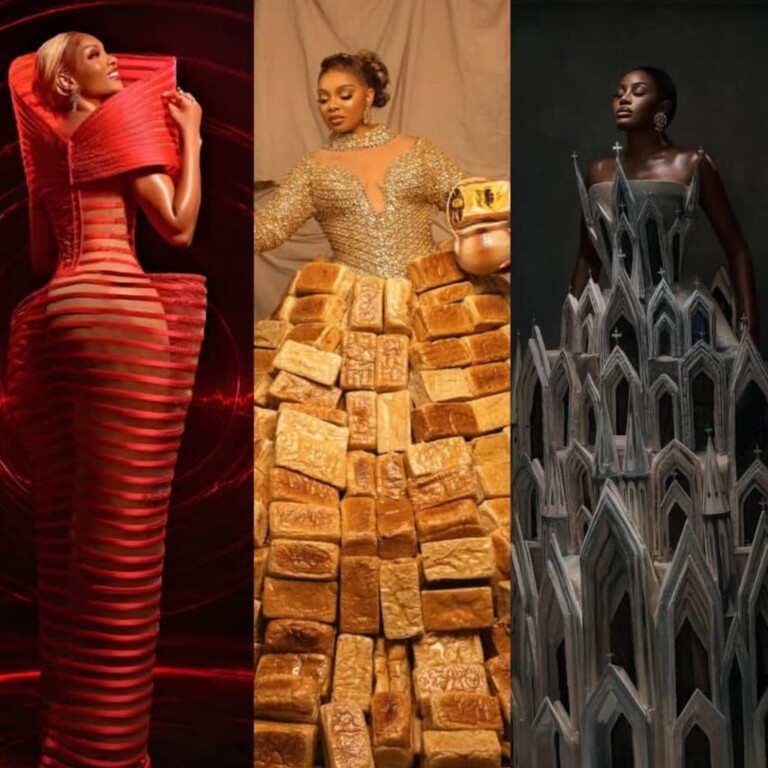
From sculptural gowns and shimmering fabrics to richly embroidered agbadas and reimagined traditional ensembles, this year’s AMVCA transformed Eko Hotel & Suites, Lagos into a global runway reflecting the growing influence, confidence and commercial power of Nigeria’s fashion industry.
For many viewers and social media users, the fashion conversations online were nearly as loud as the award wins themselves. Celebrities including Osas Ighodaro, Nana Akua Addo, Bisola Aiyeola, Mercy Atang, Akin Faminu and several others dominated social media timelines with elaborate designs that blended glamour, storytelling and cultural symbolism. But beyond the glitter and celebrity spectacle, the AMVCA red carpet has increasingly become a reflection of the evolution of Nigeria’s fashion industry itself.
A decade ago, AMVCA fashion conversations were mostly centered on who looked elegant and who missed the mark. Today, the red carpet has evolved into a high-stakes creative showcase where designers compete for visibility, virality and cultural relevance. This year’s event featured everything from avant-garde couture pieces to heavily beaded traditional ensembles inspired by African royalty and indigenous craftsmanship.
The Cultural Day segment especially highlighted how Nigerian designers are modernising traditional aesthetics instead of abandoning them.
Aso-oke, beads, coral accessories and indigenous embroidery were fused with contemporary tailoring and dramatic silhouettes, reflecting a fashion industry that is becoming both proudly African and globally competitive.
Fashion at the AMVCA is no longer simply about dressing celebrities. It has become performance, branding and cultural storytelling rolled into one.
Nigeria’s fashion industry has grown significantly over the past decade, driven by entertainment, social media and international exposure. What was once viewed largely as local tailoring culture is now part of a multi-billion-naira creative economy. Industry reports estimate that Nigeria’s apparel and footwear market alone has surpassed one billion dollars, with projections showing continued growth in the coming years. Platforms such as the Lagos Fashion Week have also helped push Nigerian designers onto global runways and into international conversations around African luxury fashion.
Designers including Amaka Osakwe, Bubu Ogisi, Deola Sagoe, Veekee James and Kenneth Ize have helped redefine global perceptions of African fashion by combining indigenous textiles, sustainability and contemporary luxury aesthetics.
The continued global rise of Nollywood and Afrobeats has also expanded the reach of Nigerian fashion. As Nigerian music and film gain international audiences, fashion has become part of the cultural export.
Celebrities attending events like the AMVCA are now styled with global visibility in mind because their images travel instantly across Instagram, TikTok, X and fashion blogs worldwide.
One of the biggest drivers of Nigeria’s fashion evolution is social media itself. Today, it takes only minutes for a red carpet look to trend online. Fashion creators are no longer designing solely for physical audiences. They are also creating for viral digital consumption. The result is more experimental silhouettes, exaggerated craftsmanship and cinematic styling designed to dominate online conversations.
At AMVCA 2026, viewers described some looks as “works of art” and “royalty-inspired” etc. Languages that reflect how Nigerian fashion is increasingly positioned as wearable spectacle rather than ordinary red-carpet dressing.
This shift has also created opportunities for stylists, makeup artists, photographers, fashion content creators
textile makers and emerging designers who now use celebrity events as launchpads for visibility and business growth.
Still, beneath the glamour lies a deeper conversation about sustainability and industry structure.
Despite its rapid growth, Nigeria’s fashion industry continues to face major challenges including limited manufacturing infrastructure, high production costs, textile import dependence, poor government support and piracy of original designs.
Many designers still rely heavily on handmade production systems, while international expansion remains difficult for smaller brands without funding or global distribution support.
Yet events like the AMVCA continue to prove that Nigerian fashion possesses something increasingly valuable in the global market: identity.
At a time when global fashion is searching for authenticity and cultural storytelling, Nigerian designers are turning heritage into luxury and local craftsmanship into aspiration.
More Than a Red Carpet
What the AMVCA 2026 red carpet ultimately revealed is that Nigerian fashion is no longer simply evolving. It is redefining itself, steadily moving from imitation to innovation.
And as Nollywood, Afrobeats and African pop culture continue gaining global attention, Nigerian fashion may well be emerging as one of the country’s most influential cultural exports yet.