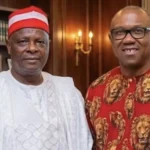
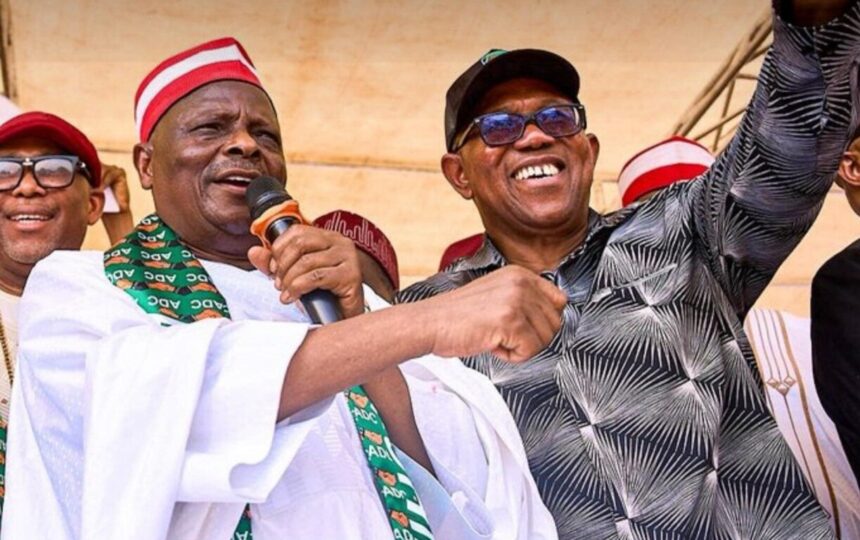
Nigeria’s political landscape is already shifting ahead of the Nigeria 2027 election. Former Anambra State governor Peter Obi and former Kano State governor Rabiu Kwankwaso are aligning with the Nigerian Democratic Congress (NDC).
As a result, both leaders are set to leave the African Democratic Congress (ADC) after citing internal crises and a toxic environment.
Notably, this move reflects a broader effort to reposition ahead of the next election cycle. Obi and Kwankwaso contested the 2023 election on different platforms.
However, they later joined a coalition aimed at strengthening opposition forces. Now, by moving to the NDC, they appear to be seeking a more stable and focused platform.
Moreover, supporters believe the alliance could reshape opposition politics. Obi continues to attract strong support from young and urban voters. Meanwhile, Kwankwaso maintains a loyal grassroots base in northern Nigeria. Therefore, their combined influence could create a more competitive political force.
On the other hand, critics have raised serious concerns about the development. They argue that frequent party switching can weaken public trust. In addition, many voters may begin to question the consistency of political leaders.
Furthermore, analysts warn that the emergence of another party could split opposition votes. If this happens, the ruling party may gain an advantage. Consequently, the lack of unity among opposition groups remains a major concern.
At the same time, the success of the NDC will depend on several critical factors. First, the party must quickly build a strong national structure. Second, it needs to attract more influential political figures. Without this, its chances in 2027 may remain limited.
Equally important, Obi and Kwankwaso must manage their ambitions carefully. Otherwise, internal conflicts could weaken the alliance before it fully develops.
Ultimately, this development highlights deeper challenges within Nigeria’s political system. While new alliances often emerge, they do not always lead to lasting change. Nevertheless, the coming months will prove crucial.
If the NDC can consolidate support and maintain unity, it may become a formidable force. However, if divisions persist, the pattern of fragmented opposition could continue into the 2027 election.