
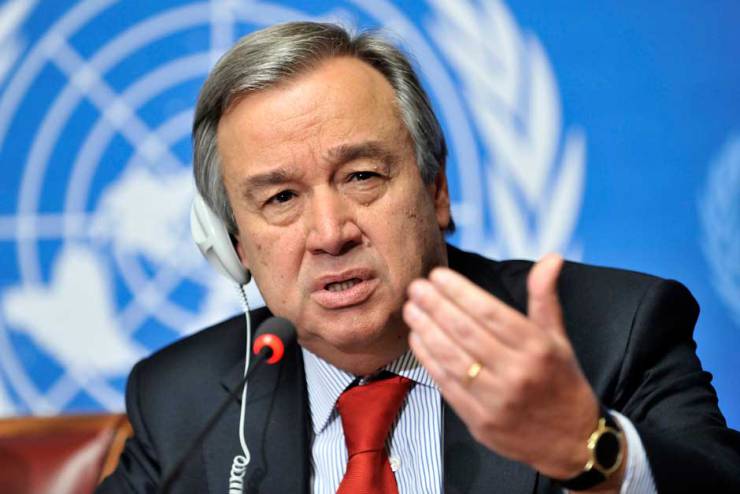
The Secretary-General of the United Nations, António Guterres, has condemned what he described as “institutional discrimination” against Muslims worldwide.
In a message marking the International Day to Combat Islamophobia, Guterres said many Muslims face systemic barriers and prejudice in different parts of the world.
Read Also: Guterres Urges Global Action to Advance Gender Equality
According to him, Muslims are often subjected to institutional discrimination, socio-economic exclusion and biased immigration policies.
He also highlighted concerns about unwarranted surveillance and profiling targeting Muslim communities.
“Muslims worldwide often face institutional discrimination, socio-economic exclusion, biased immigration policies and unwarranted surveillance and profiling,” Guterres said.
Call for equality and human rights
The UN chief urged governments and societies to recommit to equality, human rights and dignity for all people, regardless of their religious beliefs.
He stressed that respect for religious freedom remains a key principle of international human rights.
Warning about rising hate speech
Guterres also warned about the growing spread of anti-Muslim rhetoric and hate speech, which he said contributes to harassment and violence.
According to him, addressing Islamophobia requires stronger global efforts to promote tolerance, dialogue and protection of religious rights.