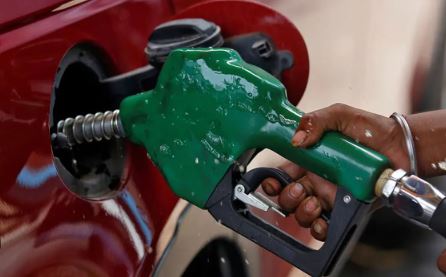
The Federal Competition and Consumer Protection Commission (FCCPC) says it has started monitoring petrol prices and other essential commodities across Nigeria.
The move follows the escalating conflict involving the United States, Israel, and Iran in the Middle East, which has triggered volatility in global energy markets.
FCCPC Executive Vice Chairman Tunji Bello disclosed this while briefing journalists at the Aso Rock Presidential Villa in Abuja on Thursday.
Bello said the commission has already deployed officials nationwide to track petrol price movements.
He explained that the agency wants to ensure petrol stations and fuel suppliers do not exploit Nigerians.
According to him, the commission will question stations that refuse to adjust prices when suppliers reduce fuel costs.
“If somebody reduces N100 or N200 and a station is still selling petrol for N1,500 per litre, we must ask why,” Bello said.
The commission considers the monitoring exercise a temporary response to global market instability.
The FCCPC boss noted that petrol prices influence the cost of many everyday goods.
Higher fuel prices increase transportation costs, which often lead to higher food and commodity prices.
Therefore, the agency is tracking not only petrol but also other consumer goods.
Bello said the commission wants to prevent external shocks from erasing economic gains recorded by the federal government over the past two years.
The FCCPC is working closely with the Department of Petroleum Resources to ensure compliance with fuel pricing regulations.
The collaboration aims to strengthen oversight in the downstream petroleum sector.
Officials say the partnership will help prevent unfair pricing practices at filling stations.
Energy and Fintech Lead Consumer Complaints
Bello revealed that the energy and fintech sectors generate the largest number of consumer complaints in Nigeria.
Other sectors that attract complaints include telecommunications and banking.
Between March and August 2025, the FCCPC resolved more than 9,000 complaints and recovered over ₦10 billion for consumers.
By March 2026, the total amount recovered for Nigerian consumers exceeded ₦20 billion.
FCCPC Investigates Airlines Over Price-Fixing
The commission is also investigating several airlines over alleged ticket price manipulation during the 2025 Christmas season.
Bello said airline tickets that normally cost between ₦145,000 and ₦150,000 suddenly rose to between ₦400,000 and ₦670,000.
Following widespread complaints, the FCCPC launched an investigation into the matter.
Preliminary findings suggest that about five or six airlines may have engaged in price-fixing.
Price-fixing occurs when companies agree to set prices at certain levels instead of allowing competition to determine market prices.
Such practices violate the Federal Competition and Consumer Protection Act.
Airlines May Refund Excess Charges
The FCCPC said it is considering forcing airlines found guilty of price exploitation to refund excess charges to passengers.
Bello noted that the commission has already completed its investigation and will release a final report soon.
The report will outline penalties for the airlines involved.
Electricity Tariff Complaints Also Under Review
The commission also addressed complaints related to electricity tariff bands.
FCCPC Executive Commissioner for Operations Louis Odion said the agency’s role is not to control prices but to prevent consumer exploitation.
He explained that Band A electricity consumers should receive at least 20 hours of power daily, while Band B consumers should receive 16 hours.
Odion urged Nigerians to submit formal complaints when electricity providers fail to meet these service standards.
FCCPC Strengthens Legal Enforcement
The commission’s Head of Legal Services, Chizenum Nsitem, disclosed that the FCCPC has prosecuted more than 25 cases since the enforcement of the Federal Competition and Consumer Protection Act in 2019.
According to him, the commission currently has over 30 cases pending before the Federal High Court and the FCCPC Tribunal.
Several cases are also before the Court of Appeal following appeals by companies challenging tribunal decisions.