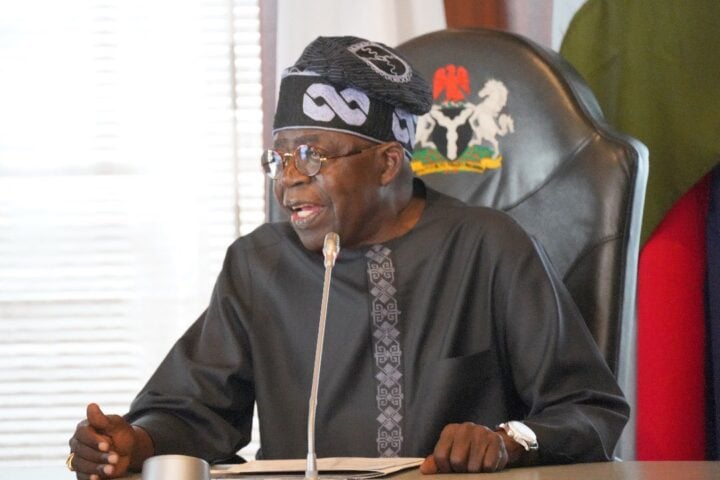
President Bola Ahmed Tinubu is holding a high-level security meeting with top military and intelligence officials at the State House in Abuja, following a deadly airstrike in Borno State.
The emergency session highlights growing concerns over Nigeria’s security situation across multiple regions.
The meeting began around 2:00 pm on Monday at the Presidential Villa. It marks the President’s first official engagement since returning from Bayelsa State.
The closed-door session comes at a time of heightened tension, with security threats escalating in several parts of the country.
Those present include key security leaders such as the Chief of Defence Staff and the service chiefs of the Army, Navy, and Air Force.
Also attending are the heads of intelligence agencies, including the Department of State Services and the National Intelligence Agency.
The Inspector-General of Police, Tunji Disu, and the National Security Adviser, Nuhu Ribadu, are also part of the discussions.
Meanwhile, the meeting follows a recent advisory by the United States Department of State.
The agency authorised the departure of non-emergency embassy staff from Abuja, citing a worsening security environment.
It also placed 23 Nigerian states under a “Level 4: Do Not Travel” warning, pointing to threats from insurgents, bandits, and violent groups.
However, the Nigerian government rejected the assessment. Information Minister Mohammed Idris said the alert reflects internal US protocols and does not represent the overall situation in the country.
The meeting also comes after a controversial airstrike by the Nigerian Air Force in Borno State.
The strike targeted suspected positions of Boko Haram and Islamic State West Africa Province along the Borno–Yobe border.
However, reports indicate that the strike hit Jilli Market, killing over 100 civilians, including children, and injuring many others.
Human rights group Amnesty International condemned the incident and called for an independent investigation.
Survivors reportedly placed the death toll at over 100, with some estimates suggesting it could be as high as 200.
The Air Force confirmed carrying out operations in the area but did not acknowledge civilian casualties.
Meanwhile, presidential aide Temitope Ajayi defended the strike. He said the market had been used as a logistics base by insurgents, making it a legitimate target.
Nigeria continues to face multiple security threats nationwide.
The Northeast battles insurgency, while the Northwest and North-Central regions grapple with banditry and kidnappings. In the Southeast, separatist violence remains a concern.
Recent incidents include mass killings and abductions across several states in 2026, further raising alarm about national security.
As the meeting continues, expectations remain high for decisive actions from the government.
The outcome could shape Nigeria’s security strategy in the coming months, especially as pressure mounts both locally and internationally.