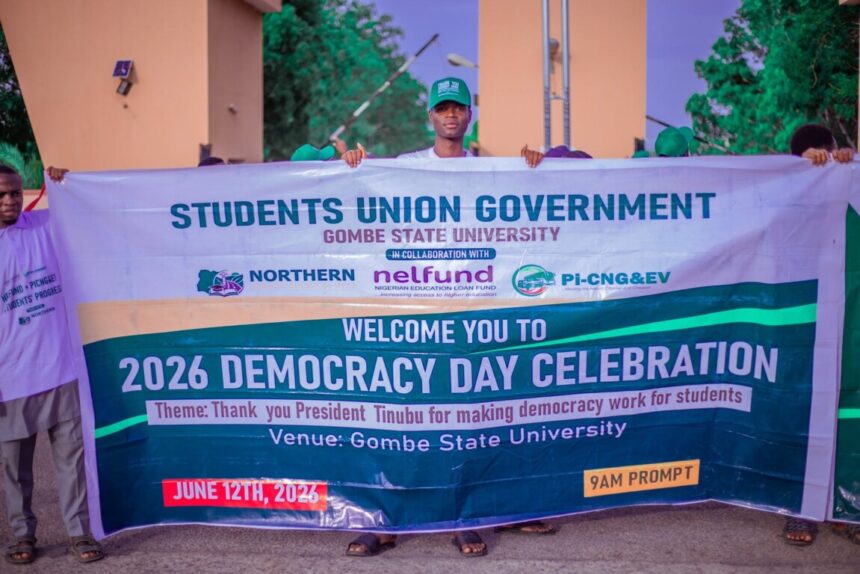
The endorsement of the administration of President Bola Tinubu by the Students’ Representative Council (SRC) of Gombe State University has generated criticism from some students and members of the public.
A critic, Zakaria Salisu, condemned the decision by the GSU-SRC leadership, describing the endorsement as disappointing and a reflection of what he called the failure of young Nigerians to demand meaningful reforms.
Salisu argued that student leaders should focus on issues affecting young people, including insecurity, rising living costs, and challenges facing education, rather than aligning with political administrations.
He questioned the decision to support the Tinubu administration at a time when many Nigerians are experiencing economic hardship and security challenges.
“Barring a total lack of self-awareness, how can one rationalize endorsing an administration at the very moment that has plunged Nigerians into such dire straits?” Salisu said.
He raised concerns over insecurity in parts of the country, including attacks, abductions, and threats affecting students and communities, arguing that such challenges should influence the positions taken by youth representatives.
Salisu also criticised the impact of economic policies on families and students, noting that rising costs have made it difficult for many parents to meet educational expenses.
He cited reports of students facing difficulties with payment of school fees, adding that some interventions had been needed to assist affected students.
According to him, the endorsement by the GSU-SRC leadership undermines the role of students as advocates for accountability and social change.
However, supporters of the student council’s decision argue that youth organisations have the right to engage with government and recognise policies or programmes they believe align with their interests.
The controversy has renewed debate over the role of student bodies in political issues and whether youth representatives should maintain neutrality or participate actively in national political conversations.