An Irish institution once mailed a £1 refund, even though the postage cost more than the cheque itself, Its reason was simple: it would not keep what did not belong to it.
In another case, a British shopkeeper refused to mix old and new stock, She chose honesty over profit. When someone suggested otherwise, she asked a blunt question: “Are you a thief?”
These are not extraordinary acts. In many societies, they are basic expectations.
A Different Reality at Home
However, the situation in Nigeria often feels different.
A pensioner dies waiting for funds lost in bureaucracy. A student pays fees for opportunities that never come. A contractor supplies substandard drugs and later blames “the system” when lives are lost.
In such an environment, accountability fades. As a result, wrongdoing often hides behind titles and influence.
While some societies worry about taking £1 too much, Nigeria struggles with far larger abuses. The gap is not just economic, it is moral.
When Values Become Words
Ironically, many of these ethical standards like honesty, fairness, dignity are deeply rooted in religious and cultural teachings.
Yet, practice often falls short of principle.
People quote scripture, but daily actions tell a different story. Leaders speak of integrity, yet public resources fund private luxury. Citizens condemn corruption, yet sometimes participate in small acts of dishonesty.
This contradiction weakens trust across society.
The Normalisation of the Abnormal
Over time, repeated compromise has made wrongdoing seem normal.
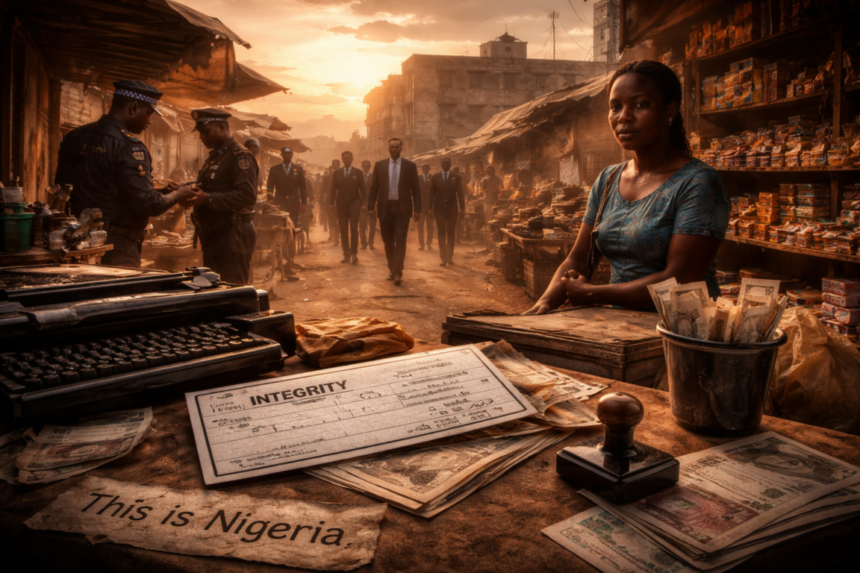
For example, a lecturer may demand payment to pass a student. A police officer may expect money at checkpoints. A civil servant may delay files without “something extra.”
When someone refuses, others often label them naïve.
“This is Nigeria,” they say, as if corruption is a fixed identity rather than a collective choice.
The Cost of That Mindset
That phrase “this is Nigeria” has become a shield for bad behaviour.
It excuses failure and justifies misconduct. It lowers expectations and discourages change.
However, it is not destiny, it is a habit and like all habits, it can change.
What Integrity Still Looks Like
Despite the challenges, integrity still exists.
It shows in the teacher who works without resources but refuses to give up on students. It appears in the young professional who rejects fraud, even under pressure from family.
These acts may seem small. However, they carry weight.
They are quiet decisions that keep systems from collapsing entirely.
A Choice, Not a Culture
The examples from Ireland or Britain are not about geography. They are about choice.
Integrity is not Western or African. It is human.
The real question is not whether Nigeria has corruption. Every country does. The question is whether society still recognises it and rejects it.
Or whether it has been renamed “hustle,” “connection,” or “being sharp.”
Where Change Begins
Change will not start with grand speeches, it will begin with small decisions, it starts when individuals refuse the next shortcut, when honesty becomes practical again, not theoretical.
When “this is Nigeria” becomes a warning, not an excuse.
Until then, many will keep waiting. Waiting for fairness that never comes. Waiting for systems that fail them.
But recovery remains possible—if enough people choose it.