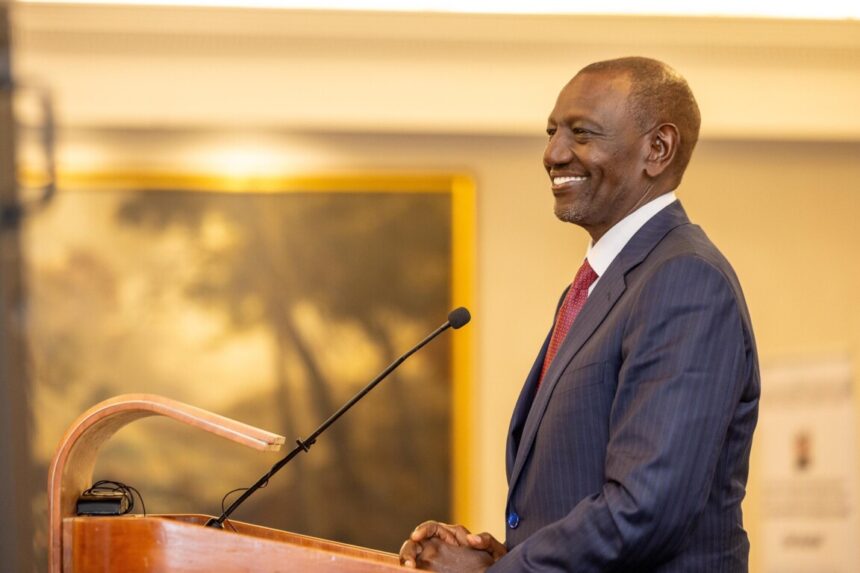
William Ruto is facing widespread backlash after comments he made about Nigerian-accented English during a diaspora engagement in Italy.
The remarks have triggered debate across Africa, with critics describing them as dismissive and unnecessary in a continent that shares deep cultural and historical ties.
Ruto, while addressing Kenyans abroad, said Nigerians are often difficult to understand when they speak English.
He added that Kenyan English ranks among the best in the world, a statement that drew laughter from the audience but strong criticism online.
The comments quickly spread across social media platforms, where many users from Nigeria and beyond condemned the remarks.
Critics argue that language should not be used as a measure of intelligence or national value, especially in Africa where English is a shared colonial legacy.
Backlash Across the Continent
Public reaction intensified within hours of the speech going viral.
Many users accused Ruto of reinforcing stereotypes about African accents.
Hopewell Chin’ono said English is not a standard for measuring human capability or national progress.
He added that African identity should not be judged through colonial language expectations.
Language Diversity and Identity
Both Kenya and Nigeria use English as an official language.
However, each country has developed distinct variations shaped by local languages.
Nigeria’s linguistic diversity, with over 500 languages, strongly influences pronunciation, rhythm, and tone.
Kenya’s blend of Bantu, Nilotic, and Cushitic languages also shapes its English accents.
These differences reflect cultural identity rather than linguistic inferiority.
Defence of Nigeria’s Global Influence
Several commentators pushed back strongly against the remarks.
Former senator Shehu Sani referenced Nigeria’s global cultural influence.
He highlighted literary figures such as Wole Soyinka, Chinua Achebe, and Chimamanda Ngozi Adichie.
Supporters say these achievements show Nigeria’s global intellectual standing beyond language debates.
Calls for Political Focus
Some critics urged Ruto to focus more on domestic issues in Kenya.
They pointed to rising living costs, unemployment, and economic pressure on citizens.
Others warned that such remarks risk distracting from more urgent governance challenges.
Renewed Nigeria–Kenya Online Tensions
Online exchanges between Nigerians and Kenyans intensified after the comments.
These digital debates often revolve around culture, politics, and national pride.
The tension follows earlier remarks by Bola Ahmed Tinubu comparing Nigeria’s economic standing with other African nations.
While no direct link has been confirmed, some observers believe the timing contributed to the reaction.
Mixed Reactions in Kenya
Reactions within Kenya remain divided.
Some supporters argue Ruto’s comments were humorous and misunderstood.
Others acknowledge that the remarks may have been poorly framed and diplomatically insensitive.
Broader Language Debate in Africa
Nigeria remains Africa’s largest English-speaking nation.
Over time, Nigerian English has evolved into a widely recognised variant influenced by local languages and culture.
Expressions from Nigeria are increasingly entering global usage and dictionaries.
The diaspora community also continues to shape and spread these linguistic patterns internationally.
Growing Sensitivity Around Identity
Analysts say the incident highlights ongoing sensitivities around language and identity in Africa.
They warn that leaders must be careful when addressing cultural differences in public forums.
As African cooperation deepens, such conversations are likely to remain politically and socially significant.