By Gloria Attah
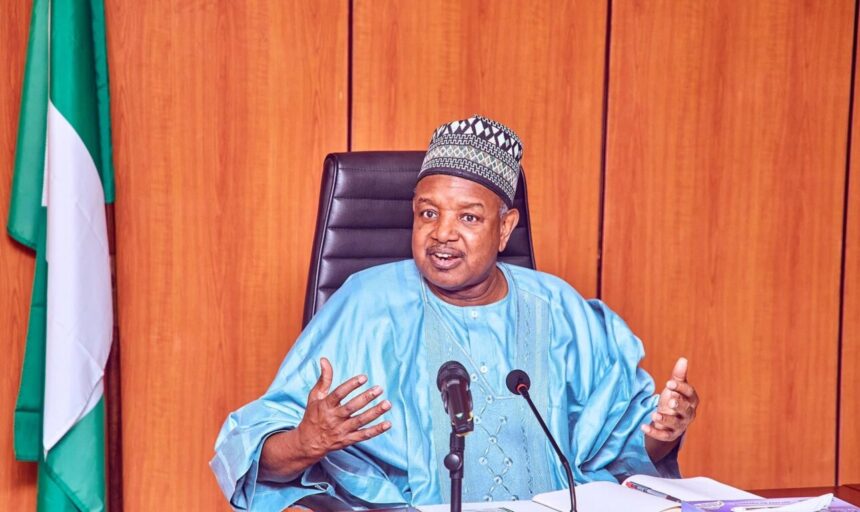
Nigeria’s Minister of Budget and Economic Planning, Abubakar Bagudu, has called on German investors to expand their presence in Nigeria, saying the economic reforms introduced by President Bola Tinubu have created stronger opportunities for business growth and long-term investment.
Bagudu made the appeal during the Nigeria–Germany Business Day held in Lagos on Monday night. The event, themed “Germany and Nigeria: Cooperating for Development and Business Promotion,” brought together government officials, investors, and business leaders from both countries.
According to the minister, the Tinubu administration has implemented major reforms aimed at restoring macroeconomic stability, improving fiscal sustainability, and rebuilding investor confidence.
“Under President Bola Tinubu’s leadership, decisive measures have been implemented to restore macroeconomic stability, improve fiscal sustainability, strengthen investor confidence, and reposition the economy for long-term growth,” Bagudu said.
He explained that reforms such as the removal of fuel subsidies, liberalisation of the foreign exchange market, improved revenue mobilisation, and broader structural adjustments were difficult but necessary steps to strengthen the economy.
Bagudu said the impact of the reforms is beginning to reflect in key economic indicators.
According to him, Nigeria’s total revenue increased from about ₦19.9 trillion in 2023 to over ₦28 trillion in 2025, surpassing government targets.
He also noted that the country’s foreign exchange reserves rose to more than $46 billion in early 2026, describing it as the highest level recorded in nearly eight years.
The minister added that inflation, which rose during the adjustment period, is gradually easing, while international rating agencies including Fitch and S&P Global have upgraded Nigeria’s outlook to Stable.
Bagudu further stated that Nigeria’s capital market recorded strong performance in the first quarter of 2026, with the Nigerian Exchange ranking among the better-performing emerging markets globally.
He added that Nigeria’s removal from the Financial Action Task Force (FATF) grey list has also boosted confidence in the country’s financial and regulatory systems.
Describing Nigeria as one of Africa’s biggest long-term growth destinations, the minister revealed that trade between Nigeria and Germany increased by almost 30 per cent to about €3 billion in 2025.
He said Nigeria is currently Germany’s second-largest trading partner in Sub-Saharan Africa, with over 90 German companies operating in sectors such as energy, healthcare, manufacturing, logistics, and industrial services.
Bagudu also reiterated the Federal Government’s target of building a one-trillion-dollar economy by 2030 through the National Development Plan (2026–2030), which places private sector investment at the centre of economic transformation.
He identified renewable energy, agro-processing, manufacturing, digital innovation, and technical education as major sectors with strong investment potential for German businesses.
The minister said Nigeria’s Energy Transition Plan and ongoing digital skills programmes are creating fresh opportunities for partnerships and economic growth.
He urged Nigerian and German businesses to translate discussions from the Business Day into concrete investments capable of driving industrial growth, job creation, technology transfer, and shared prosperity for both countries.