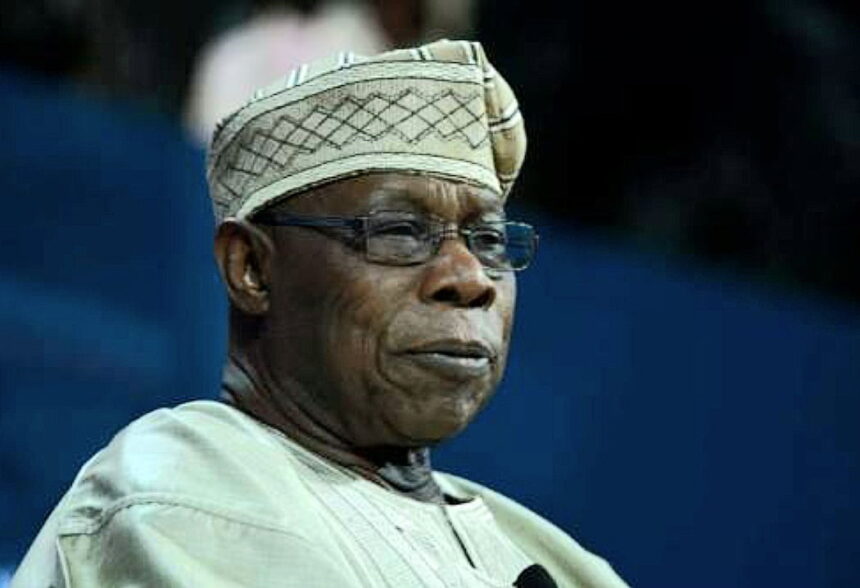
Former President Olusegun Obasanjo has reiterated his skepticism over plans to revive Nigeria’s refineries, despite assurances from President Bola Ahmed Tinubu that they will become operational soon.
The disagreement highlights ongoing debate over the future of Nigeria’s refining sector and the feasibility of government-led rehabilitation efforts.
Tinubu’s Plan and Government Position
President Tinubu had earlier expressed optimism that the country’s refineries would resume operations after the completion of a rehabilitation contract involving the Nigerian National Petroleum Company Limited and Italian firm Maire Tecnimont SpA.
Government officials insist the project is on track, urging Nigerians to wait for results before drawing conclusions.
Presidency Pushes Back on Obasanjo’s Remarks
Responding to Obasanjo’s criticism, Tinubu’s Senior Special Assistant on Media and Publicity, Tope Ajayi, dismissed the former leader’s comments.
He argued that Obasanjo is not directly involved in the technical work and should not undermine the assessment of engineers handling the project.
Ajayi said the government is relying on expert reports from engineers and officials overseeing the refinery rehabilitation.
He also stressed that the timeline remains valid, noting that there is still time for delivery before the stated deadline.
Obasanjo Stands Firm on His Position
However, Obasanjo maintained his stance during an interview on Sony Irabor Live, insisting that past experiences inform his doubts.
He argued that Nigeria’s refineries have historically failed due to structural and operational challenges.
According to him, expecting a different outcome without fundamental reforms may be unrealistic.
Calls for Public-Private Partnerships
The former president highlighted the success of the Nigeria Liquefied Natural Gas (NLNG) project as an example of an effective public-private partnership.
He explained that NLNG has remained successful because the private sector holds a majority stake, ensuring efficiency and accountability.
Obasanjo suggested that similar models could help revive Nigeria’s refining sector.
Why Shell Declined to Run Refineries
Obasanjo also revealed that he once approached Shell to manage Nigeria’s refineries during his presidency.
However, the company declined the offer for several reasons.
First, Shell reportedly stated that it generates most of its profits from upstream operations rather than refining.
Second, the company considered Nigeria’s refineries too small compared to global standards at the time.
Maintenance and Corruption Concerns
In addition, Obasanjo said Shell raised concerns about poor maintenance practices.
He claimed the refineries were handled by unqualified personnel, leading to frequent breakdowns.
Furthermore, he pointed to corruption within the system as a major deterrent for international operators.
These issues, he argued, continue to affect the viability of the refineries today.
Ongoing Debate Over Nigeria’s Refining Future
The exchange between Obasanjo and the presidency reflects a broader national debate on energy reform.
While the government remains confident in its rehabilitation strategy, critics argue that deeper structural changes are needed.
As the December timeline approaches, attention will remain on whether the refineries can finally deliver on long-standing expectations.