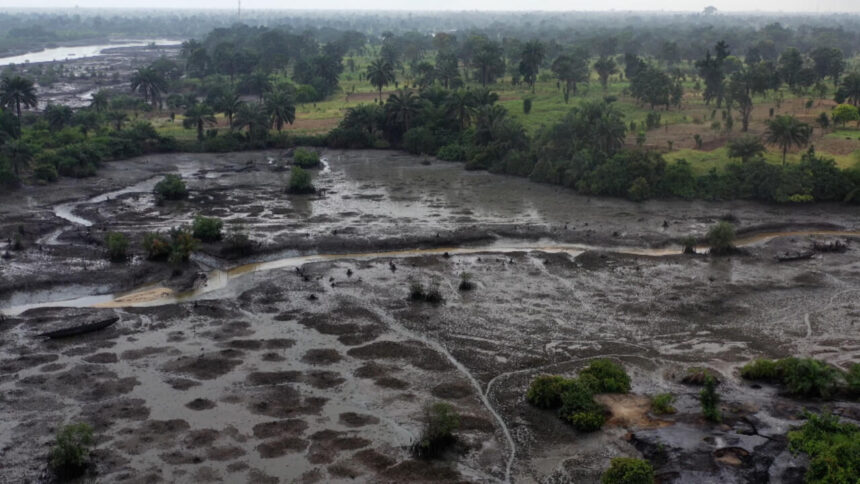
The World Health Organization (WHO) has launched a major health study in Ogoniland, Rivers State, to assess the impact of long-term hydrocarbon exposure on residents.
The study follows recommendations from the United Nations Environment Programme (UNEP) report on environmental pollution in Ogoni communities. It is being conducted by the International Agency for Research on Cancer (IARC), a specialised agency under WHO.
The Project Coordinator of the Hydrocarbon Pollution Remediation Project (HYPREP), Prof. Nenibarini Zabbey, previously confirmed that WHO was commissioned to carry out the health assessment.
Speaking during visits to traditional rulers in Gokana and Tai local government areas, IARC Lead Scientist Ann Olysson said the research will focus on both impacted and non-impacted communities. This approach, she explained, will allow for accurate comparison.
According to Mr Michael Cowing, who led the original UNEP study, the research will involve about 4,000 participants. Fieldwork began in mid-2025 after preliminary mapping and desk reviews.
Researchers will examine residents involved in farming, fishing, sand mining, and artisanal refining. These occupations may carry different levels of hydrocarbon exposure. Therefore, the study aims to provide comprehensive scientific data.
Professor Iyenemi Kakulu of Rivers State University said participants will be scientifically selected. She added that researchers will seek voluntary consent and collect samples such as blood and urine.
Meanwhile, traditional rulers pledged support for the project. The King of Tai Kingdom, HRM Samuel Nnee, assured the delegation of cooperation. Similarly, the King and Natural Ruler of Gokana Kingdom, HRM Festus Paago Bagia, described the initiative as a welcome development.
The study is expected to last nearly three years. Experts say its findings will guide future environmental remediation and public health policies in Ogoniland.