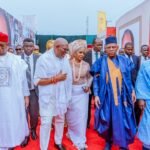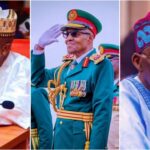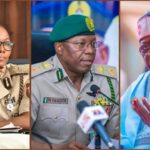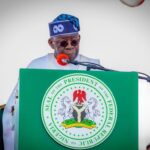
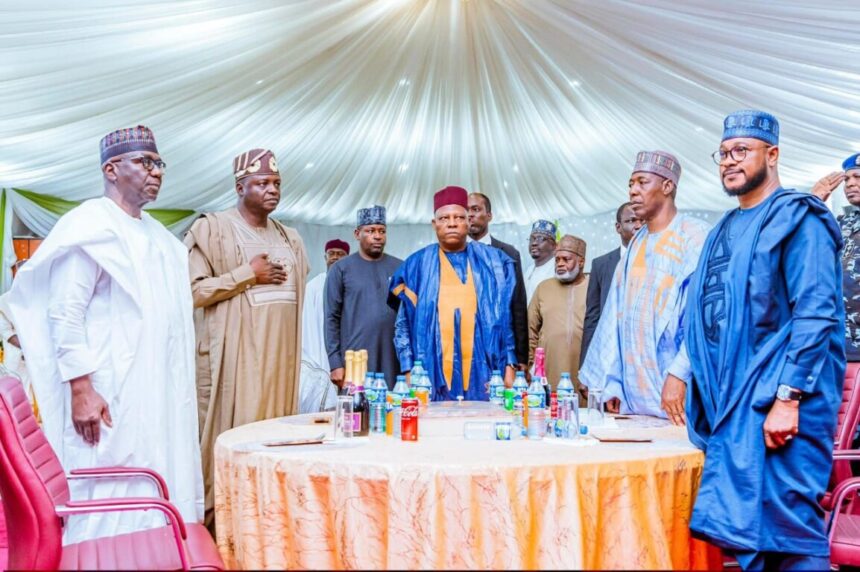
A wave of public criticism has followed the presence of 10 state governors and Vice President Kashim Shettima in Maiduguri for a high-profile wedding, while many Nigerians noted their absence at the funeral of a senior military officer killed in active service.
The funeral, held on April 15, 2026, was for Brigadier General Oseni Omoh Braimah, Commander of the 29 Task Force Brigade under Operation Hadin Kai, who died alongside other troops during insurgent attacks in Borno State. Soldiers were seen standing in solemn guard as the fallen officer and his colleagues were laid to rest in Maiduguri.
The development has triggered debate across the country, with many Nigerians questioning the priorities of political leaders. Critics argue that the absence of top government officials at the funeral of a senior officer who died defending the nation reflects a lack of national empathy and patriotism.
Some commentators described the situation as symbolic of a disconnect between political elites and the sacrifices made by security personnel on the frontlines of Nigeria’s insurgency fight. They contend that honoring fallen heroes should take precedence over social engagements, particularly for leaders entrusted with national responsibility.
However, others have urged caution in drawing conclusions, noting that official schedules, security considerations, and prior commitments may have influenced attendance decisions. They argue that representation at such events does not always require the physical presence of all top officials.
The incident comes amid ongoing security challenges in Nigeria’s North-East, where troops under Operation Hadin Kai continue to battle insurgent groups. The death of Brigadier General Braimah has been widely regarded as a significant loss within military circles.
As reactions continue to unfold, the episode has reignited conversations about leadership responsibility, symbolic governance, and the expectations Nigerians place on public office holders during moments of national grief.