
Bhutan people and culture offer one of the world’s most fascinating examples of a society that values happiness, tradition, and nature above material wealth.
Nestled in the Eastern Himalayas, Bhutan has preserved its unique identity through Buddhist beliefs, colorful festivals, traditional dress, and a deep respect for the environment.
Although the country continues to modernize, its people remain committed to protecting customs that have shaped the kingdom for centuries.
Most countries measure success through Gross Domestic Product (GDP), Bhutan, however, created the idea of Gross National Happiness (GNH). The government introduced the concept in the 1970s. Since then, leaders have used it to guide national policies.
The philosophy encourages balanced development, it promotes environmental protection, cultural preservation, good governance, and sustainable economic growth. As a result, Bhutan focuses on improving lives instead of increasing wealth alone.
Buddhism Shapes Daily Life
Buddhism influences nearly every part of Bhutanese society. Most citizens follow Vajrayana Buddhism, and its teachings encourage compassion, respect, and mindfulness.
Prayer flags decorate mountain passes. Prayer wheels line village paths. Monks chant inside centuries-old monasteries that overlook peaceful valleys. Many families begin each day with prayers before heading to work or school.
The country’s best-known monastery, Tiger’s Nest (Paro Taktsang), rises dramatically from a cliff above the Paro Valley. Every year, thousands of pilgrims and visitors climb the mountain to reach this sacred site.
Holding On to Tradition
Bhutan has embraced modern development without abandoning its identity. Instead, the country protects traditions that have shaped its people for centuries.
Men proudly wear the knee-length gho, while women dress in the elegant kira. Government offices, schools, and public ceremonies encourage traditional clothing. This practice strengthens national pride and keeps cultural heritage alive.
People also speak Dzongkha, the national language, alongside several regional dialects.
Festivals Full of Color and Faith
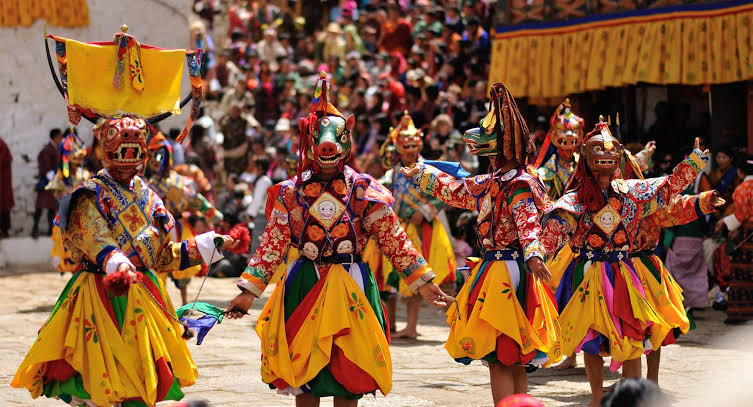
Bhutan’s famous Tshechus bring communities together every year. These religious festivals take place inside ancient fortress monasteries known as dzongs.
During the celebrations, monks perform sacred Cham dances while wearing colorful masks and embroidered robes. Musicians play traditional instruments as crowds gather to watch the performances.
The dances tell stories from Buddhist teachings. They also remind people to live with kindness and wisdom.
The highlight comes on the final morning. Monks carefully unfold a massive silk Thongdrel that portrays Guru Padmasambhava. Many people believe seeing the sacred image brings blessings and good fortune.
Among all the festivals, the Paro Tshechu remains the country’s most famous celebration. It attracts thousands of worshippers and visitors every spring.
Food That Celebrates Spice
Bhutanese cuisine reflects mountain life and local farming traditions. Red rice, buckwheat, vegetables, yak meat, and cheese appear in many meals.
The country’s national dish is Ema Datshi. It combines fresh chilies with local cheese to create a rich and spicy stew.
Unlike many cultures, Bhutanese cooks treat chilies as vegetables instead of seasonings. As a result, most meals deliver bold flavors and plenty of heat.
Ancient Customs Still Thrive
Visitors often notice colorful phallic paintings on homes and wooden carvings above doorways. Although they may seem unusual, locals value these symbols deeply.
The tradition honors the 15th-century Buddhist teacher Drukpa Kunley. Families believe the symbols protect homes, drive away evil spirits, and attract good fortune.
For Bhutanese communities, these images represent faith rather than controversy.
More Than Just Archery
Archery serves as Bhutan’s national sport. However, it also brings villages together.
Competitors shoot arrows at small targets placed more than 140 meters away. Between rounds, teammates sing traditional songs, dance, and celebrate every successful shot. Friendly jokes and laughter often fill the competition grounds.
The sport reflects teamwork, culture, and community spirit.
Protecting Nature for Future Generations
Bhutan ranks among the world’s leading environmental champions. Its constitution requires forests to cover at least 60 percent of the country.
Dense forests provide safe habitats for rare animals, including the Himalayan takin, snow leopard, Bengal tiger, and golden langur. Bhutan also produces clean hydropower and absorbs more carbon than it releases.
However, climate change now threatens the country’s glaciers. As temperatures rise, melting ice creates new risks for communities, rivers, and wildlife.