
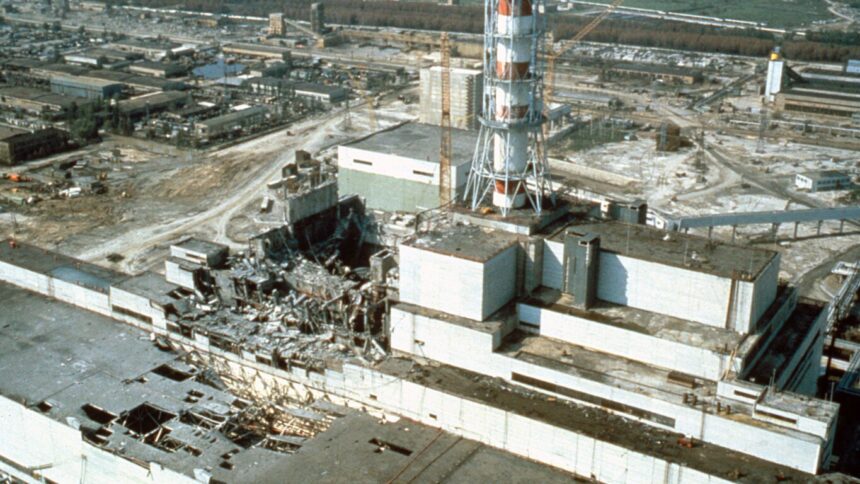
Ukraine marks the 40th anniversary of the 1986 Chernobyl nuclear disaster, the worst civilian nuclear accident in history, as war heightens safety fears at the site.
The anniversary falls during Russia’s ongoing invasion of Ukraine, now in its fourth year, which has renewed concerns about the fragile condition of the closed nuclear plant and the risk of another radioactive incident.
Explosion that changed history
At 01:23 on April 26, 1986, a failed safety test triggered a massive explosion in reactor number four at the Chernobyl plant in northern Ukraine, then part of the Soviet Union. The blast destroyed the reactor core and released huge amounts of radioactive material into the air.
The fire burned for more than 10 days. Emergency crews dropped sand, clay and lead from helicopters to contain the radiation. Investigators later blamed flawed reactor design and operator errors.
Fallout spreads across Europe
The radioactive cloud spread across Ukraine, Belarus and Russia, then moved into other parts of Europe. Sweden first detected unusual radiation levels, forcing authorities to reveal the disaster days later.
Estimates of the death toll vary. A UN report linked about 4,000 deaths to the disaster, while other groups suggest higher figures. About 600,000 cleanup workers, known as liquidators, faced high radiation exposure.
War raises new risks
Russian forces seized the Chernobyl site in 2022 at the start of the invasion. Troops later withdrew, but their presence raised fears that fighting could trigger another nuclear emergency.
Damage to containment
Engineers sealed the damaged reactor with a concrete sarcophagus after the explosion. They later installed the New Safe Confinement, a large steel structure, in 2016.
A drone strike in early 2025 damaged the outer shell and weakened its ability to contain radiation. Experts warn repairs could take years, leaving the site exposed to further risks.
Inside the exclusion zone
Authorities evacuated the area around the plant and created a vast exclusion zone across parts of Ukraine and Belarus. The nearby city of Pripyat, once home to nearly 50,000 people, still stands empty.
Experts say the area will remain unsafe for thousands of years. In the absence of people, wildlife has returned, turning the zone into a unique nature reserve.