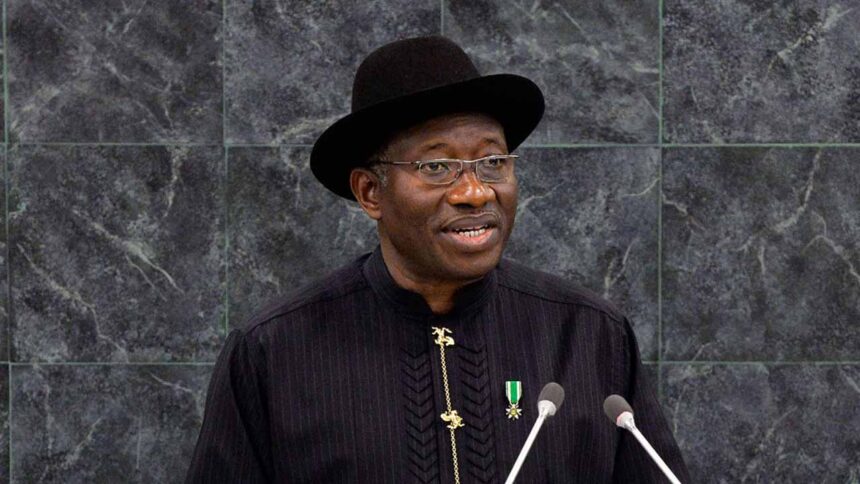
Former President Goodluck Jonathan has defended his time in office following recent criticism from former Vice President Atiku Abubakar, who described him as inexperienced during a televised interview.
Speaking at the 2025 Association of Retired Career Ambassadors of Nigeria (ARCAN) awards ceremony in Abuja, Jonathan said his administration did its best while in office and insisted that no leader governs without making mistakes.
He rejected the notion that his age or experience level at the time affected his capacity to lead, noting that he became president in 2010 at 53 and left office in 2015 at 58.
“Even when you promote yourself to the level of a god, you become a deity. All human beings must make mistakes,” Jonathan said.
Responding directly to criticisms of inexperience, he questioned the benchmark being applied to leadership qualifications.
“They say I was too young. Must it have been 100 years before I ran the affairs of the state?” he asked.
Jonathan maintained that his administration made significant contributions to Nigeria’s international standing, particularly in diplomacy, citing Nigeria’s election to the United Nations Security Council on two occasions during his tenure.
He argued that such achievements reflected competence in governance and international engagement.
“If I were so naive, I don’t think I would have been able to navigate through that process,” he stated.
The former president reiterated that while mistakes are inevitable in leadership, his administration acted in what he believed was the best interest of the country.