
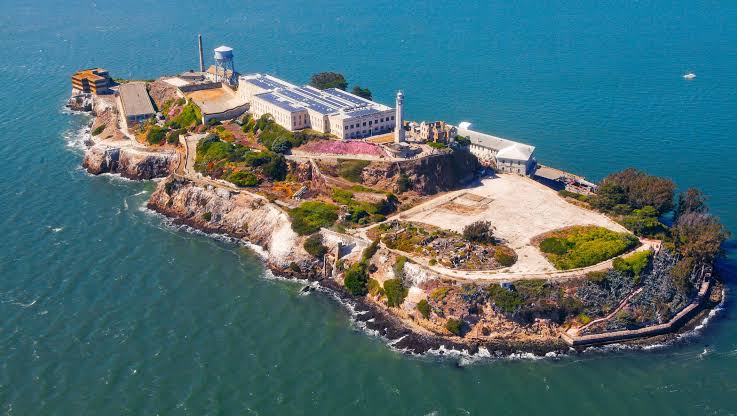
Alcatraz Island has long stood as one of America’s most iconic symbols of punishment and security.
Located in San Francisco Bay, the island once housed a prison designed for the most dangerous offenders.
Initially, the United States government used Alcatraz as a military fort.
It later became a military prison before transitioning into a federal penitentiary in 1934.
Authorities built the facility to detain high-risk and high-profile criminals.
Notable inmates included Al Capone and Robert Stroud.
Read Also: White House Seeks $152m to Reopen Alcatraz as Modern Prison
Prison officials enforced strict rules and tight security.
The island’s location made escape extremely difficult.
However, maintaining the prison proved costly over time.
Operating expenses remained high due to its remote location.
Officials had to transport water, food, and supplies by boat.
Maintenance costs also increased as the facility aged.
As a result, the government shut down Alcatraz in 1963.
Since then, the site has transformed into a major tourist attraction.
Managed by the National Park Service, it attracts millions of visitors annually.
It also serves as a historical reference point in discussions about crime and punishment.
Recently, reports suggest the White House may seek funding to reopen the facility.
The proposal includes converting it into a modern high-security prison.
Supporters argue it could help manage overcrowding and detain high-risk offenders.
However, critics question the practicality of the plan.
They point out that modern prisons already use advanced security systems.
They also argue that building new facilities on the mainland may be more cost-effective.
In addition, experts warn about human rights and rehabilitation concerns.
Reopening Alcatraz would require extensive reconstruction.
The existing structures cannot meet modern correctional standards.
Environmental and historical preservation issues could also complicate the project.
Ultimately, the debate goes beyond one facility.
It raises larger questions about justice systems and priorities.
Should governments invest in stricter detention or rehabilitation?
Should symbolic prisons return, or should systems evolve?
Alcatraz remains a powerful representation of strict punishment.
Whether it reopens or not, it continues to shape conversations on justice and policy.