
By Aisha Muhammad Magaji
Typhoon Ragasa has made landfall in southern China after battering Taiwan with torrential rains, landslides, and powerful winds that left at least 15 people dead and dozens injured. The storm, one of the most powerful to hit the region in recent years, has forced mass evacuations and disrupted transportation networks across East Asia.
Trail of Destruction in Taiwan
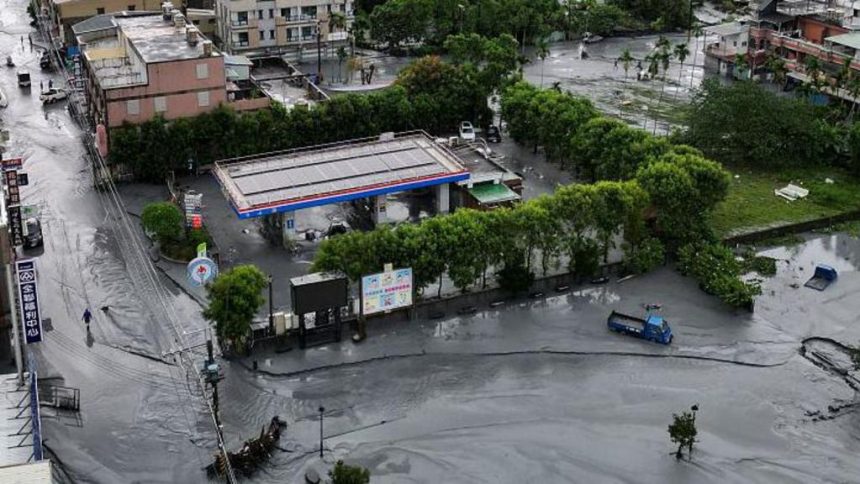
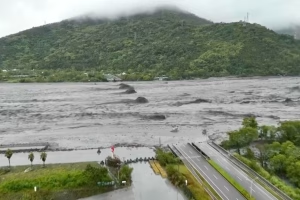
Taiwan’s Central Emergency Operations Center reported that Ragasa brought winds of up to 170 kilometers per hour, toppling power lines, uprooting trees, and damaging thousands of homes. Coastal areas were inundated as storm surges pushed seawater into fishing communities, while mountainous regions suffered multiple landslides that buried roads and cut off entire villages.
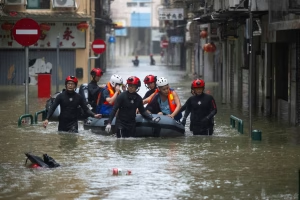
Authorities said at least 15 fatalities were confirmed, with more than 100 people hospitalized for storm-related injuries. Rescue workers are continuing to search for missing persons, particularly in areas of Hualien and Taitung counties.
President Lai Ching-te visited affected communities on Tuesday, pledging swift relief measures and long-term support for rebuilding. “This is a tragedy for Taiwan, but we will rise stronger,” he said, urging citizens to heed evacuation warnings as aftereffects of the storm continue.
China Braces for Impact
By Wednesday, Ragasa had moved across the Taiwan Strait and made landfall near Guangdong province in southern China. State media reported heavy rains and winds tearing through Guangzhou, Shenzhen, and Zhuhai, prompting the evacuation of more than 250,000 residents from low-lying coastal areas.
China’s National Meteorological Center issued a red alert, its highest weather warning, forecasting widespread flooding, possible landslides, and wind gusts surpassing 150 km/h. Schools were closed, flights grounded, and train services suspended in multiple cities.
Local officials said emergency shelters had been activated, with disaster response teams on standby to provide medical care, food, and temporary housing to evacuees.
Regional Disruptions
The typhoon has also disrupted regional transportation and trade routes. Hundreds of flights were canceled across airports in Taipei, Hong Kong, and southern China. Major shipping lanes in the South China Sea were temporarily suspended as port authorities assessed damage risks.
Analysts say the storm could further strain global supply chains already under pressure, given that southern China is a major manufacturing hub.
Climate Change Concerns
Meteorologists noted that Typhoon Ragasa’s rapid intensification is consistent with broader climate change patterns. Warmer sea surface temperatures are fueling stronger and wetter storms in the Pacific region, posing greater risks to coastal communities.
“Ragasa is another reminder of how vulnerable East Asia is to extreme weather events,” said Dr. Wen Li, a climate scientist at Peking University. “We need stronger regional cooperation on disaster preparedness and climate adaptation.”
Human Resilience
Despite the devastation, stories of resilience are emerging. In Taiwan, neighbors formed volunteer groups to help clear debris, while in Guangzhou, families in unaffected areas opened their homes to evacuees.
Authorities in both countries continue to warn residents to remain vigilant, as heavy rains and flooding may persist even after Ragasa weakens into a tropical storm.
For millions across Taiwan and China, the priority now is rebuilding shattered communities even as the storm season shows no signs of abating.