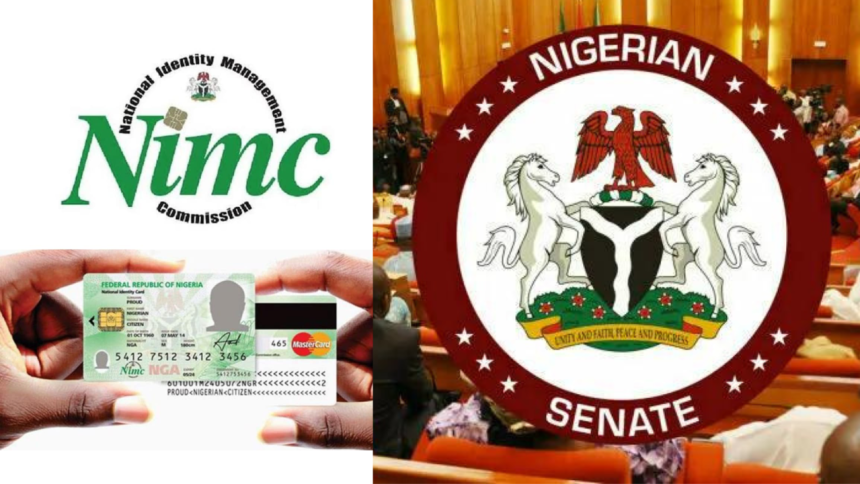
The Nigerian Senate has passed the National Identity Management Commission (NIMC) Bill, 2024, a landmark legislation aimed at strengthening the country’s national identity system, enhancing data protection, and streamlining identity verification processes across public and private sectors.
The bill, which scaled its third reading during plenary on Thursday, seeks to repeal and re-enact the National Identity Management Commission Act of 2007, granting the NIMC broader powers to manage, integrate, and regulate all national identity databases in Nigeria.
Presenting the report, the Chairman of the Senate Committee on National Identity and Population, Senator Barau Jibrin (Kano North), explained that the bill was designed to address the inefficiencies and security lapses in the existing identity management framework.
Senate Screen Amupitan as Next INEC Chairman
According to him, “The old Act no longer meets the demands of today’s digital economy. This new bill ensures data protection, strengthens national security, and promotes digital inclusion by making the National Identification Number (NIN) the core of all identity transactions in Nigeria.”
The Senate noted that the new law will make it mandatory for all citizens, legal residents, and registered entities in Nigeria to obtain and use a National Identification Number (NIN) for accessing government services, including social welfare, banking, health insurance, and taxation.
Under the proposed framework, the NIMC will also be empowered to license and regulate private data collection firms, ensuring they comply with data protection standards and contribute to a unified national database.
Senator Jibrin further stated that the Commission will now work in closer coordination with agencies such as the National Population Commission (NPC), Nigeria Immigration Service (NIS), and the Independent National Electoral Commission (INEC) to synchronize national data and prevent duplication.
The bill also introduces stricter penalties for identity theft, data manipulation, and unauthorized access to personal records, reflecting growing concerns about cybersecurity and the misuse of citizens’ personal information.
Senate President Godswill Akpabio, who presided over the session, commended the committee for its work, noting that the bill will strengthen Nigeria’s identity infrastructure and support the country’s transition to a digital economy.
He said, “This bill will close the gap in our national identity framework and ensure that every Nigerian is recognized in law and in record. It is a significant step toward improving governance, service delivery, and national planning.”
The bill’s passage comes amid renewed efforts by the federal government to expand digital identity coverage across Nigeria. According to the National Identity Management Commission, over 105 million Nigerians have already been enrolled in the NIN database as of September 2025. However, millions more particularly those in rural areas are yet to be captured due to limited infrastructure and connectivity challenges.
Digital experts say the new legislation could accelerate progress toward achieving the United Nations Sustainable Development Goal (SDG 16.9), which calls for legal identity for all by 2030.
Speaking on the development, technology policy analyst Dr. Yemi Adedokun said, “The NIMC Bill is long overdue. By harmonizing identity systems and enhancing data protection, Nigeria can improve financial inclusion, security, and access to social services.”
He, however, cautioned that the government must prioritize data privacy, noting that past data breaches and weak enforcement have eroded public trust. “Passing the bill is one thing; implementing its provisions transparently and securely is another,” he added.
The bill will now be transmitted to the House of Representatives for concurrence before being forwarded to President Bola Tinubu for assent.
If signed into law, the NIMC Act, 2024, will mark a major step toward creating a unified, secure, and digitally verifiable identity system in Nigeria essential for governance, national planning, and combating financial crimes.