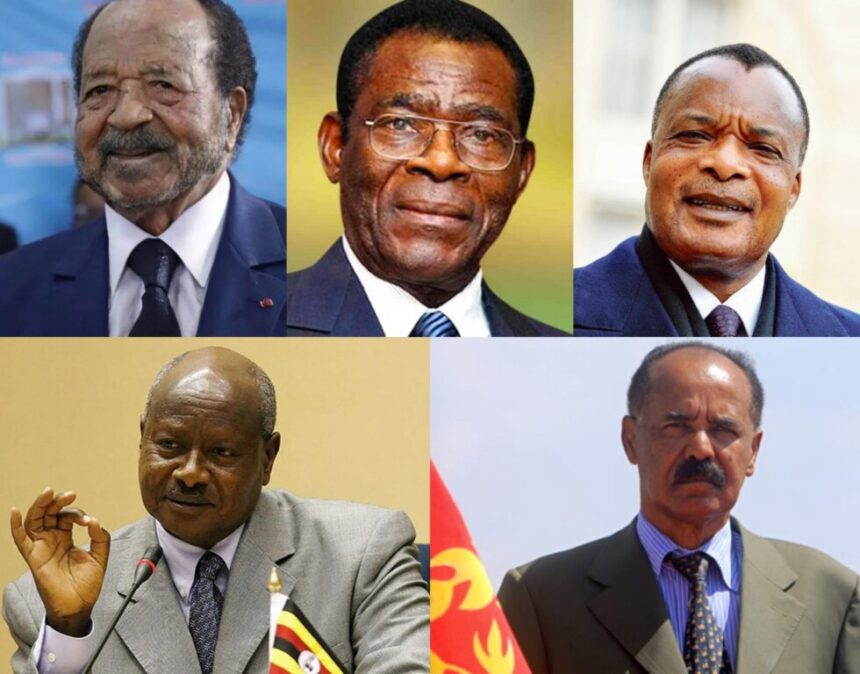
Africa’s sit-tight syndrome refers to leaders staying in power for decades, even when they fail to deliver. Countries like Cameroon and Uganda are clear examples in which Paul Biya and Yoweri Museveni have ruled for over 30 years.
The main reasons are weak institutions, constitutional manipulation, and control of security forces. Many leaders remove term limits, influence elections, and use state resources to maintain loyalty. Fear of prosecution after leaving office also makes them reluctant to step down.
The result is poor governance, corruption, and limited opportunities for new leadership. So what hhis Means for Democracy in Africa?
First, it weakens accountability. When leaders stay too long, elections lose their effectiveness as tools for removing poor-performing governments.
Second, it limits political competition and leadership renewal, preventing new ideas and younger leaders from emerging.
Finally, it reduces public trust in democracy, as citizens begin to see elections as procedural rather than meaningful.
The solution is to strengthen democratic institutions, protect term limits, and empower citizens to demand accountability. Africa’s progress depends on leadership renewal, not lifetime rule.
Until this happens, the sit-tight syndrome will remain a major obstacle to Africa’s political and economic progress.