By Aisha Muhammad Magaji
The ongoing dispute between the Petroleum and Natural Gas Senior Staff Association of Nigeria (PENGASSAN) and Dangote Refinery has escalated following the dismissal of over 800 Nigerian workers by the refinery. PENGASSAN alleges that the layoffs were retaliatory actions against union members and accuses the refinery of replacing Nigerian workers with foreign nationals. In response, PENGASSAN initiated a nationwide strike, halting crude and gas supplies to the refinery and disrupting operations at key oil and gas institutions, including the Nigerian National Petroleum Corporation (NNPC) and regulatory bodies such as the Nigerian Upstream Petroleum Regulatory Commission (NUPRC) and the Nigerian Midstream and Downstream Petroleum Regulatory Authority (NMDPRA) .
The Federal Government intervened, convening a reconciliation meeting to address the escalating conflict and its potential impact on Nigeria’s oil production and refined product distribution.
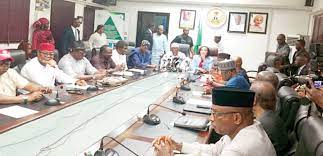
The initial reconciliation meeting, scheduled for 2:00 p.m. on Monday, September 29, 2025, was delayed due to the late arrival of key stakeholders and commenced around 3:50 p.m. The meeting, chaired by the Minister of Labour and Employment, Mohammed Dingyadi, and attended by PENGASSAN leadership, Dangote Refinery management, the Minister of Finance, and directors from NUPRC and NMDPRA, lasted for approximately nine hours into the early hours of Tuesday, September 30. Despite extensive discussions, the meeting ended without reaching an agreement, prompting plans to reconvene at 2:00 p.m. on Tuesday to continue negotiations.
Subsequently, the reconciliation meeting was moved to the Office of the National Security Adviser (NSA), with the Minister of Labour and Employment, Mohammed Dingyadi, and members of PENGASSAN who had earlier arrived for the meeting proceeding to the NSA’s office for continued discussions .
In parallel with the reconciliation efforts, Dangote Refinery sought legal intervention. The National Industrial Court in Abuja issued an interim injunction restraining PENGASSAN and associated entities from halting crude and gas supplies to the refinery. The court emphasized that the continuation of the strike could irreparably damage the refinery’s operations and disrupt essential services to the Nigerian public .
The ongoing dispute underscores the tension between labor rights and corporate restructuring within Nigeria’s oil and gas sector. The Federal Government’s involvement highlights the critical nature of the situation, given the sector’s significant contribution to the nation’s economy. The outcome of the reconciliation efforts and legal proceedings will be pivotal in determining the future dynamics between labor unions and private sector employers in Nigeria’s energy industry.